

This week, guest blogger Rosalind Masson shares the beginnings of her research journey, offering insight into the intersections between embodied practice and resilience after trauma…
As a choreographer, dancer and somatic practitioner, my practice is situated in my body. I work with and am used to working under conditions of transience, ephemerality and instability. In 2022, during the first wave of refugees from Ukraine, I curated a dance festival titled ‘Only the body is my Home’, or, ‘Allein mein Körper is mein Zuhause’. The program was hosted in a skate hall, where the undulations of the space offered enclaves for each performer to situate themselves and the audience within the uneven landscape. At this time, my personal life was collapsing, and I had to step down from the final days of the festival, recognising the deep wave of shock that was now inhabiting my body. I couldn’t eat and I lost weight. One of the signs of entering into a state of ‘flight or fight’ is that the digestive system shuts down so that the body reserves energy.

Throughout the next weeks and months and years of extreme stress, I was in dialogue with a young female artist who had arrived from the Ukraine. At that time, talking to her felt uniquely relatable. We shared our struggles with one another: our feelings of powerlessness, fear, censorship, anger, alienation and disbelief in the face of conflict. I remember listening to her describe the difficult decision to leave her home, family and friends behind. She described her journey away from the Ukraine, packing the one rucksack she was advised to and boarding a train with many other passengers. During the journey, they were warned of an incoming missile attack. In that moment of suspended disbelief, awaiting what could be potential death, she told me she experienced a feeling of overwhelming helplessness and witnessed such collective terror that it had changed her forever.
When a crisis happens, the body is overwhelmed and has to go into autopilot to survive, resorting to the various coping mechanisms of flight, fight, freeze and/or fawn. The ability for self-reflection is reduced and the possibility to perform socially is diminished. Crises are imprinted upon our nervous and endocrine systems as trauma that can effect our normal physiological processes and have lasting impact on mental and physical function. If crises are survived, then symptoms of post traumatic stress disorder can remain and therapeutic tools are needed to dissipate them. Depending on the frequency, severity and duration of the crisis and following crises, with access to support, knowledge and a safe space, the body and mind can recover. When subject to continuous new crises, mental and physical resilience is gradually worn down and can perpetuate a state of trauma response that permanently damages the individual and severely alters the course of that individual’s life.
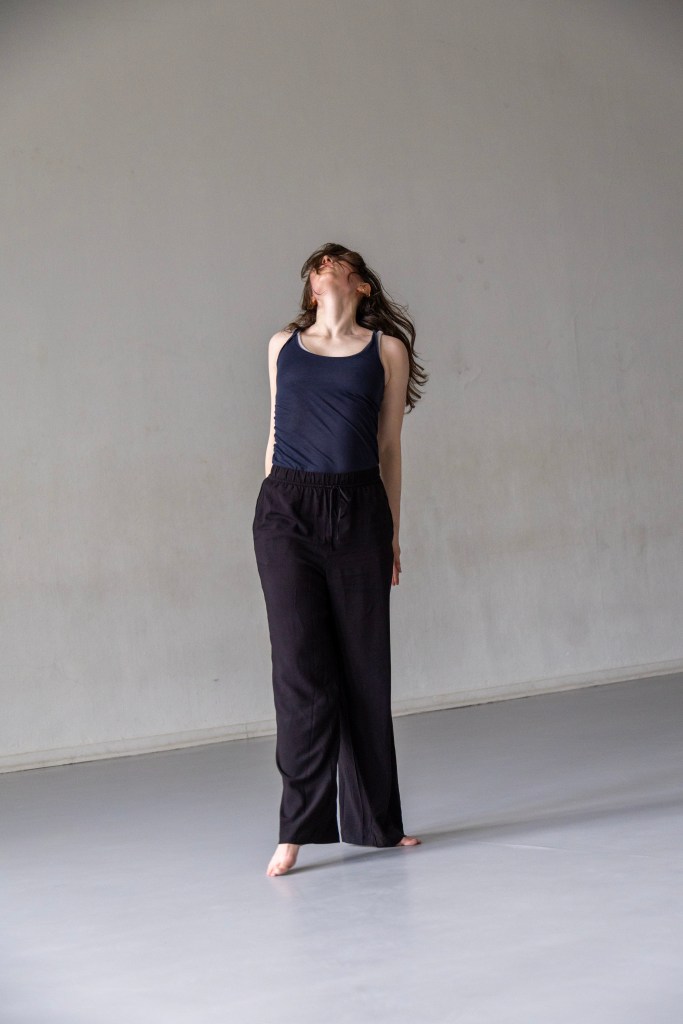
After three years of dealing with the impacts of my own crises, trauma and trauma responses, I’m in the process of attempting to reconcile the socio-political, professional and personal aspects of my life. It’s not an easy process. It’s a question of sovereignty as much as recovery: a re-inhabitation of my own body and mind as a safe space that can function within the ongoing challenges and multiple losses. In an attempt to self medicate via somatics and build financial resilience, I embarked upon my Yoga teacher training and have started a YouTube channel. Looking at the early days of this channel, I see a performance of a woman (me) trying to adapt to survive. I am curious where my research journey will lead me in five years’ time. My Ukrainian friend messages me from Paris where she is now living. ‘Know any good dance schools here?’ she writes. ‘Hope you are doing okay’.

Rosalind Masson is a dancer, choreographer, media artist and yoga teacher from Glasgow. Her most recent research with Jer Reid (Glasgow/Workroom) and Moss Beynon Juckes (Berlin/Heizhaus) involved using somatics to access emotional states in the development of new work. She is currently looking at options to continue this research via doctoral study. From 2020 – 2023 she was supported by Fonds Darstellende Kunst, Hellerau European Centre for Art, Dancebase, Creative Scotland and Dance North to research symbiotic awareness. From 2020 – 2022 she curated and directed the international festival TanzTage Goerlitz and has been a core member of Laborgras since 2014. Her choreographic and film work has been shown internationally at various festivals and venues in the UK, US and Germany.
You can follow Rosalind’s practice-based research journey through any of the following channels:
 SGSAH Blog