

This week, resident blogger Ebba Strutzenbladh writes about her experience of doing improvisational theatre, and explains why she thinks many PhD researchers (and others) would benefit from the improv mindset.
Between 2021 and 2023, I was a member of an improv group here in Aberdeen. It started as an add on Meetup; a user introduced himself as ‘a pretty random guy and improv nerd’ and wondered if there was anyone around who might want to meet in a public space every week to play improv games. Him, me and another beginner met in the Aberdeen art gallery one Sunday afternoon and began exploring improv together:

Over time, we became a group of 15 or so. In this group I found some of my closest friends in Scotland. We went on to hold a weekly seminar where we invited members of the group and others to speak about their expertise and other projects of theirs; a Monday chess club; a Sunday film group; and we went on multiple summer outings together. It was, and is, a truly remarkable group of people.
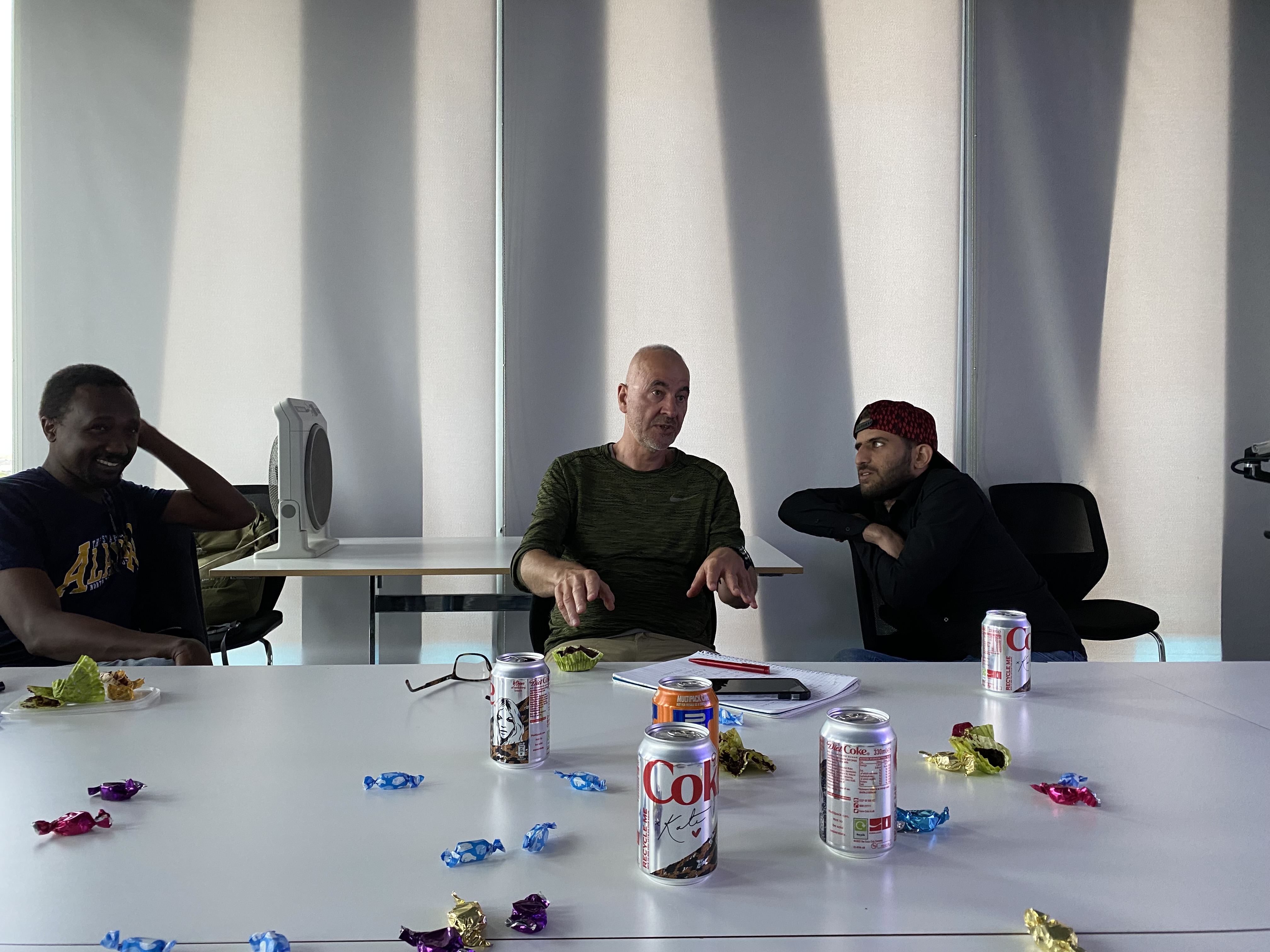

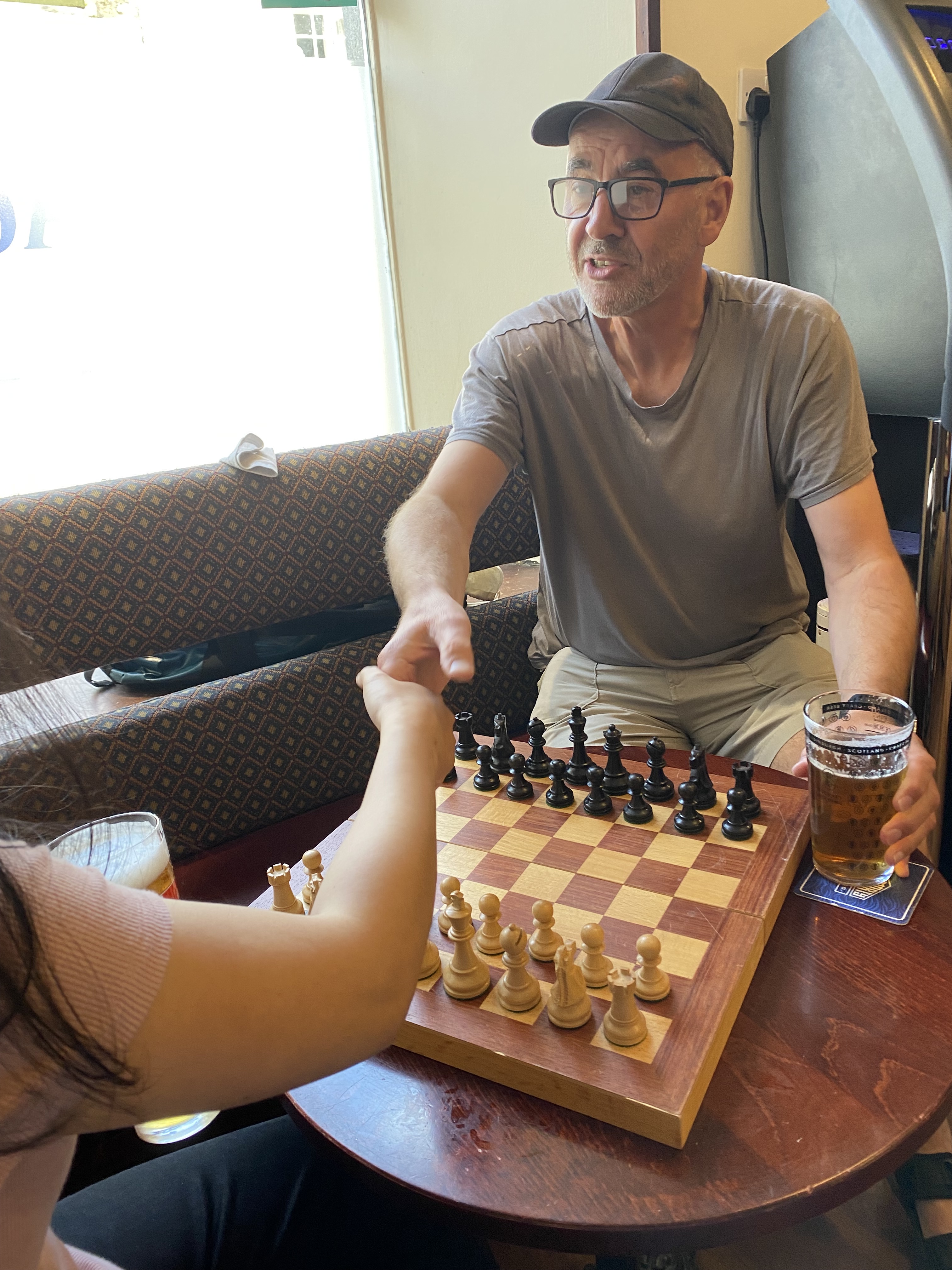


I want to drive home a point: though 90% of everyone I meet are terrified by the word ‘improv’, I’m arguing here that you need to try it. Perhaps this is particularly true if you are in fact terrified by the idea.

Improv is about letting go of control, about forgetting the idea that there could be a script dictating ‘right and wrong’. It’s about teamwork and learning to go along with other people’s ideas even if they seem crazy at first (famously, you’re not allowed to say ‘no’ to another person’s idea during an improv scene). Most importantly for our group, it was about meeting others in an honest way, with curiosity, without a set idea of what you were going to say and do. It was a liberating pause from the ego’s desire to control others and curate itself.


To take one exercise, I’ll introduce you to the game ‘How we meet’:1
You and a friend face each other from opposite sides of the room. You both empty your minds as best you can, and start to walk towards each other. When you meet in the middle, something has to happen. This can’t be something you planned beforehand, but has to happen * in the moment * between the two of you. When you’re done with this interaction, whether you started dancing, looked at each other for two seconds, or did a high five, you keep walking until you reach the opposite side of the room to where you began. Then you start over. The rest of the group could watch you do this, or you could divide the entire group in pairs and have everyone go at the same time.
There is an element here of observing what happens in your brain when you ‘encounter’ someone without having a preconceived idea of what the interaction should be about, while you also need to pay attention to the other person and what their instinct is telling them to do (in this sense, it’s similar to a more famous improv warmup, the ‘Mirror’ exercise, where two people face each other, mirroring each other’s movements without one in the pair continuously leading). There is no winner, no leader, no game plan. You’re not required to entertain anyone, be witty, or prove that you’ve understood the assignment.

Improv is a little bit like dancing in the sense that if you, a beginner, attend a class for people of intermediate level, you’ll feel out of place. So I recommend looking up some improv exercises online and trying them out with a group of friends that you trust. You’ll find that many of the activities are more like teambuilding exercises than proper games, which will hopefully feel liberating.

Some of the skills you’ll pick up from improv, like thinking on your feet, accepting minor mishaps, and paying attention to the needs of a group, will be useful if you’re teaching undergraduates as part of your PhD experience. The emphasis on being prepared to run with other people’s ideas and not being judgemental towards yourself and others are great skills to have in any workplace. But the best thing of all is this: unlike your thesis, whatever you do and say during an improv exercise goes away when you’re done. I think this impermanency is what we all need from time to time. We need time to play.

Photos by me and George Thomson.

Ebba Strutzenbladh is a SGSAH-funded PhD researcher at the University of Aberdeen. She has an undergraduate degree in History from Aberdeen and an MSt in Women’s Studies from the University of Oxford. During her PhD, she has tried everything from improv and teaching to boxing and beginner’s Arabic.
هههههههههههههه
- The ‘How We Meet’ improv exercise was named by my friend George Thomson, who was the other beginner in the Art Gallery in 2021. He has since started a business, also called ‘How We Meet’, that specialises in embodiment, movement, presence, storytelling, and visioning. I’ll never stop marvelling at George’s improv journey! ↩︎
 SGSAH Blog