


Iain Taylor is Programme Leader for BA (Hons) Commercial Music at University of the West of Scotland
Hi – I’m Dr Iain Taylor, and I’m a Senior Lecturer in Music at University of the West of Scotland, and co-managing editor of Riffs: Experimental Writing on Popular Music journal. Emma Dorfman, your Resident Blogger, got in touch recently to ask me if I could say a few words about the upcoming ‘Zine Your Thesis workshop that I’m running at the SGSAH Summer School on the 24th June, how it links to my wider research work, and a little bit about what to expect.
SGSAH and Me
When I was starting out on my PhD journey, way back in 2013, SGSAH opened up a whole world of intellectual possibility for me. My project, which was exploring the changing material meanings of recorded music formats in the face of digitalisation, didn’t fit neatly into a disciplinary box, and that potent cocktail of imposter syndrome and intellectual anxiety very much dominated the early months of my studies.
When I got involved with SGSAH, so much of that changed for me. The opportunity to attend and engage with events and workshops with PGRs from all round the country, working across vastly different topics, methods, and theoretical positionings to me, was a truly formative moment in my development as a researcher. Somewhere within the vibrant, interdisciplinary space that SGSAH offered to talk about my work, my project (and my confidence in explaining it) began to come together.
Over a decade later, I still have colleagues, collaborators, and friends that I made through SGSAH who play important roles in my professional and personal life. So when the chance emerged to become involved in SGSAH as an academic, through my membership of the Cultural and Museum Studies Discipline+ Catalyst, I was excited to be able to contribute in some way to helping guide new generations of researchers navigating those same intellectual anxieties and disciplinary quandaries that I was.
What do you mean by ‘Zines?
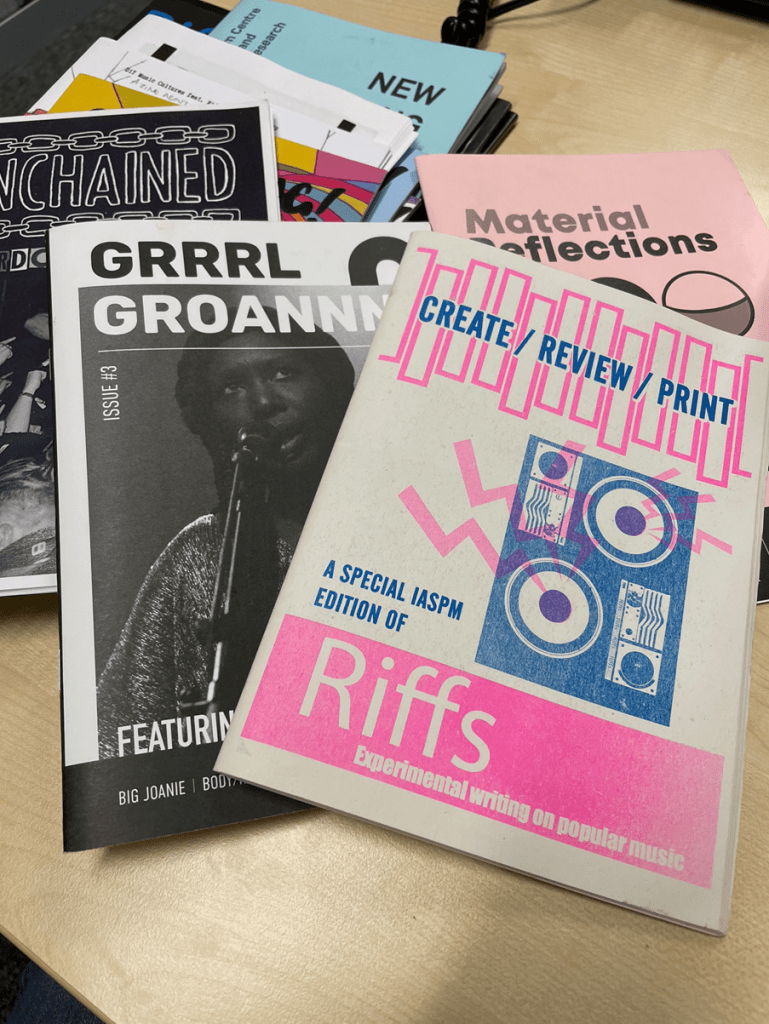
A selection of ‘Zine Publications. Photo by Author
For those not familiar, the term ‘zine is a contraction of fanzine, or “fan magazine”, a category of informal publication created by fans and enthusiasts of a given topic or area of culture. Emerging in the early-to-mid 20th century, ‘zines became a form of fan-published media, where creators from outside of mainstream and established literary discourse could give voice to their ideas, passions and frustrations.
The thing I love about the ‘zine format is that there are no rules or expectations. No debates about APA or Harvard referencing. No expectations to write in the detached third person. You make it fast, and you keep it simple. The informality of the format gives you permission to dispense with the constrictive (if, ultimately, necessary) expectations of academic discourse and cut to the heart of what it is that you want to say.
Why ‘Zines in Academia?
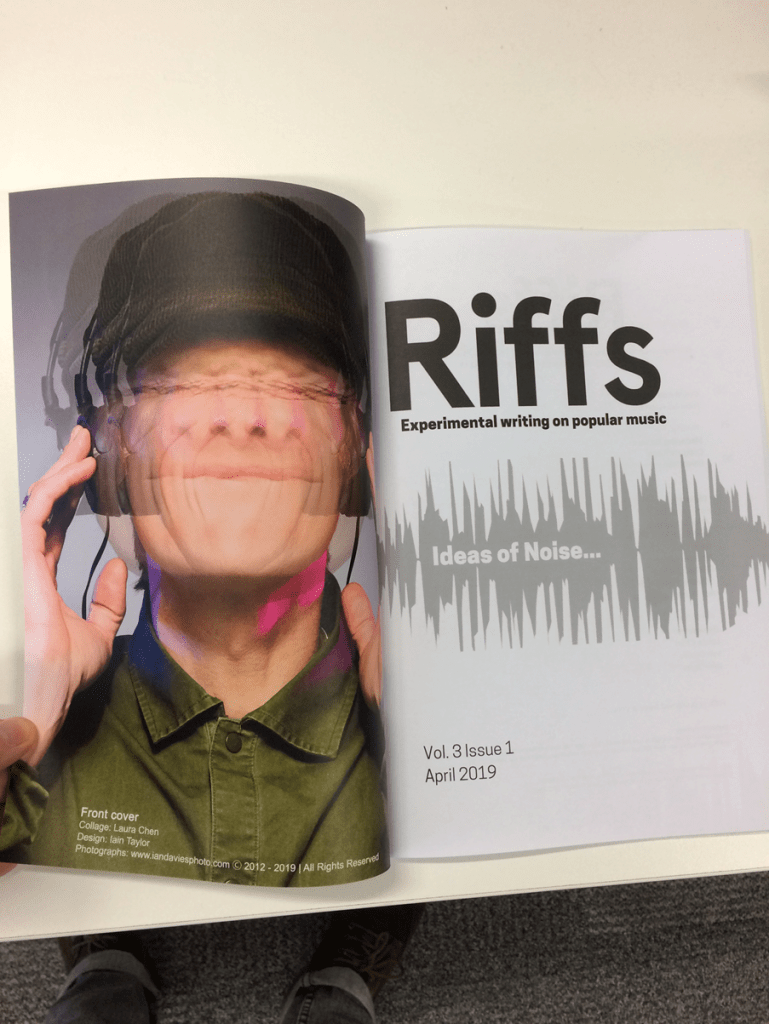
Inside cover of Riffs Vol. 3 Issue 1. Photo by author. Cover image © Ian Davies Photo
While I was working at Birmingham City University in their Birmingham Centre for Media and Cultural Research between 2015-2021, a group of PGR and ECRs got together to set up Riffs: Experimental Writing on Popular Music – a peer-reviewed journal that we set up to provide a space for publishing thinking and writing about popular music which didn’t fit neatly into more conventional academic spaces and discourses. We were heavily influenced by the fanzine cultures of a range of popular music scenes as sites of informal intellectual explorations of music, art and culture – the DIY aesthetics of informal cultural production, the materiality of ‘zines as material culture, and opportunities for thinking differently about how popular culture is analysed, discussed and disseminated. We wanted Riffs, as an academic publication, to provide similar aesthetic and independent opportunities for students and scholars to share ideas and talk about their work.
Where papers, articles and books take months and years to develop, the ‘zine format gives an impetus to capture both the ideas of that moment, and also the spirit and energy of the event, in a short informal collection of work.
Dr Iain Taylor
Since we published our first issue in 2017, the journal has gone from a fairly localised PGR journal to a truly international affair, with an editorial board made up of academics and PGRs from all over the world and a global community of readers and contributors. However, that early sense of ‘zine-inspired aesthetic identity and intellectual independence remains at the core of what we do.
As part of our project of fostering spaces to think and talk about music and culture, the editorial team often run pop up ‘Zine workshops at conferences, festivals, and other events. Sometimes these involve challenging academics to convert their conference paper into a short-and-sweet article as part of a 48hr zine, such as this example from the International Association for the Study of Popular Music (IASPM)’s UK conference in Huddersfield. Others, such as this collaboration with the Home of Metal project or this collaboration with IASPM Canada, invite participants to take part in workshops to develop ideas alongside the wider proceedings of events and presentation series.
The beauty of ‘zine-making in these kinds of spaces is that it encourages you to collect your thoughts quickly, reacting to the ideas, debates and deliberations of intellectually fertile spaces such as conferences and festivals, and to make a document of them. Where papers, articles and books take months and years to develop, the ‘zine format gives an impetus to capture both the ideas of that moment, and also the spirit and energy of the event, in a short informal collection of work.
Why ‘Zine Your Thesis?
This will be the second ‘Zine Your Thesis event that I’ve run for SGSAH, the first taking place at the summer school in 2023 at The Studio in Glasgow. The format of the event, as with others that we’ve run in the past, is that we spend the morning getting to know each other’s projects, working on a range of creative writing exercises and discussing the form and aesthetics of ‘zines. Following this, each participant has the afternoon to work on developing their contribution to the ‘zine, which is then designed, edited, and distributed back to participants, and to the wider public via the Riffs website.
One of the big challenges in the PhD process, particularly in the humanities, is cutting to the heart of what you want to say about your project. In running this workshop, my hope is that through exploring the ‘zine format, we can help you find a way of capturing, in a supportive and collaborative space, a short, pointed, and energised version of what it is that you want to say through your thesis.
I hope to see you there!
Iain Taylor is a Senior Lecturer in Music at University of the West of Scotland, and co-managing editor of Riffs: Experimental Writing on Popular Music. He sits on the Cultural and Museum Studies Discipline+ Catalyst for SGSAH. His research work is concerned with the changing material meanings of popular music objects and spaces. He is the co-editor of Media Materialities: Form, Format and Ephemeral Meaning (2023), and Popular Music Ethnographies: Practices, Places and Identities (2025), both published by Intellect Books.
Email: iain.taylor@uws.ac.uk
Pure Profile: https://myresearchspace.uws.ac.uk/admin/workspace/personal/overview/
Read the previous SGSAH – ‘Zine Your Thesis publication here
 SGSAH Blog