
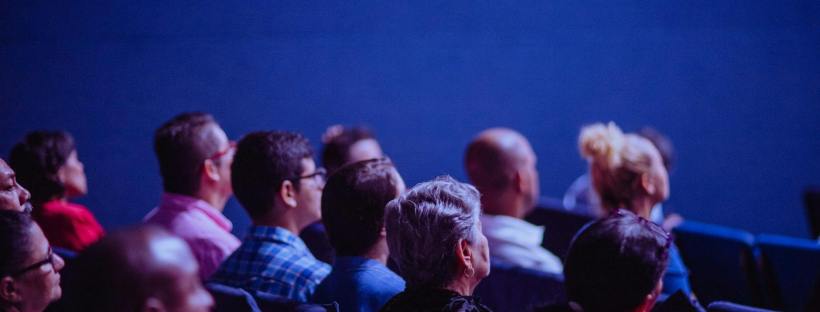
As Resident Blogger Emma prepares to present at her first conference as a PhD student, she muses on what she wishes she had known ahead of her very first conference experience nearly a year ago…
Next week, I will be presenting at the annual Theatre and Performance Research Association (TaPRA) Conference. This is the very first conference I have presented at as a PhD student, but thankfully, this is not my ‘first rodeo’. Just because this isn’t my first paper presentation, however, doesn’t make it any less nerve-wracking.
Every conference – even within the arts and humanities – is different. Sometimes there are just paper presentations. Sometimes, there are performances, performance-lectures, or even poster presentations. Sometimes there are working groups, and sometimes there are not. Sometimes there are organised networking events, and sometimes there are not. My own experience of conferences will certainly not be exhaustive, but I hope it will be illuminating and insightful for anyone wondering, How do you ‘do’ conferences?, now or in the future.
My First Conference
My first conference was the Performance Studies International (PSi) Conference, which took place in London last year shortly before my PhD. I submitted an abstract for a nonexistent paper (at the time) entitled, ‘The Trouble with Digital Theatre: Why Does Online Assembly Fail to Flourish?’. I was set to present the paper at the first panel presentation on the very first day of the conference, and I made many, many mistakes.

Me, at the 2025 PSi Conference, ready to learn some lessons…
Mistake #1: I don’t really need a PowerPoint, surely…
It was the night before I was due to present when I got the ominous request, via email, to ‘come with your presentation loaded onto a flash drive’. Presentation? I thought the paper was the presentation? In my idea of academia thus far, I thought the most brilliant papers were those that spoke for themselves. Why do an informal presentation when I could read directly from my heavily cited, incredibly jargon-y paper?
Needless to say this was a big mistake. Yes, every discipline is different. But for the most part, reading directly from your paper – no matter how good it sounds – is probably the least engaging way of presenting your research. In fact, a presentation with compelling visual imagery and an equally compelling, rigorously constructed argument, is the best approach to take. Going into what makes a good presentation merits another blog post entirely. Thanks to a recommendation from my supervisor ahead of TaPRA, I am following Ros Atkins’ guidance in The Art of Explanation, which is immensely useful for researchers and academics at all stages.
Mistake #2: I don’t need to know who else is presenting…
Last year at PSi, I not only inadvertently ran into my course leader from my Master’s programme, but also, several academics whose work I have since come to know, admire, and even found to be foundational to my research topic.
If I had done my research ahead of time, I might have made extra efforts to reach out to my former course leader ahead of time. I definitely would have made an effort to see my personal ‘academic celebrities’ present their own research, and I would have prepared some questions to ask them about some of their previous work. These questions would not be included in the formal Q&A, but rather, serve as icebreakers for any other events in which I might ‘accidentally’ bump into them. This leads me to my final mistake…
Mistake #3: I don’t need to go to other events…
Even if you aren’t the most socially-inclined, every conference-adjacent event can become a networking opportunity– a chance to make yourself known and connect with other like-minded researchers.
This is easier said than done. At my last conference, I was starting with almost no academic network to speak of, so going to after-hours events that were adjacent to the conference meant putting myself out there, making introductions, and being bold. This year, I have a bit more confidence in my research, a slightly bigger network, and hindsight from my past mistakes. Even so, the prospect of these social events is still daunting, and this year, I am pushing myself to get out there, make myself known, and make my interest in my academic celebrities known as well.

The bigger the conference, the more daunting it will seem. PSi was a pretty big conference…
Recommendations
- If you are presenting, prepare well. This seems like an obvious one, but you’d be surprised how many different ideas are out there as to what a ‘conference paper presentation’ looks like. When in doubt, ask your supervisors, colleagues, or others in your academic network what they think is best practice. Every discipline and every conference is different.
- Engage with the conference schedule beforehand, if you are able to. Find out who is attending and presenting so that you can put together your agenda (and potentially, coffee dates) as soon as possible.
- Consider attending those evening events. Again, all conferences are different, but nearly every conference agenda I have seen has some sort of formal or informal networking events outside of the conference. These are worth going to for building those connections in more informal settings, and also for having a bit of fun amidst what can be a very stressful endeavor for most!
 SGSAH Blog