
Professor Fusco speaks to resident blogger Jelena Sofronijevic about her practice, as she assumes directorship of SGSAH in January 2026.
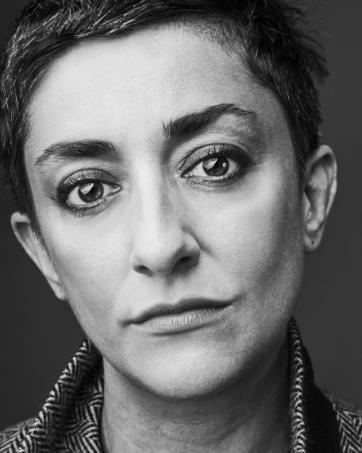
Welcome, Maria. Your appointment as Director marks the beginning of SGSAH’s second decade. How did you first encounter the organisation?
Thanks Jelena, I am totally delighted to be taking over this important role from the two previous, excellent Directors, Professors Claire Squires and Dee Heddon in this time of great change. I’ve collaborated with, and respected, SGSAH since its inception, I’ve supervised SGSAH-funded students, ran summer school workshops, devised, and led, Practice Research Assembly, which was a series of online seminars during lockdown that refined national discourse on practice-research methodologies. It’s safe to say I’m a SGSAH fan!
Much of your work centres on the voice, asking ‘who has the right to speak, and, in what way?’ You co-led the seminar SOUND POLITICS VOICE with Johanna Linsley at Edinburgh Sculpture Workshop in October 2024, and we have also both contributed as guest speakers to the MA Curation: Contemporary Art and Cultural Management course at the University of Exeter, led by Professor Tom Trevor and co-taught by Dr Helena Bonett. Could you talk about the role of public speaking in your practice, both in relation to the idea of ‘voice’, and as a writer?
Voice for me is primarily about ethics and responsibility; I take this very seriously as our words have weight, both for us an individuals and for those we communicate with. As you note, my own research has, in the past, looked to alternate, non-normative forms of academic and critical writing to make space for the conflation of the public and the personal. As a working-class person, my voice was, and still is, a primary resource, public speaking is as much labour for those who are listening as for those who are speaking, so we need to communicate with care and transparency: this doesn’t mean without complexity though, complication is undesirable, but complexity is welcome.
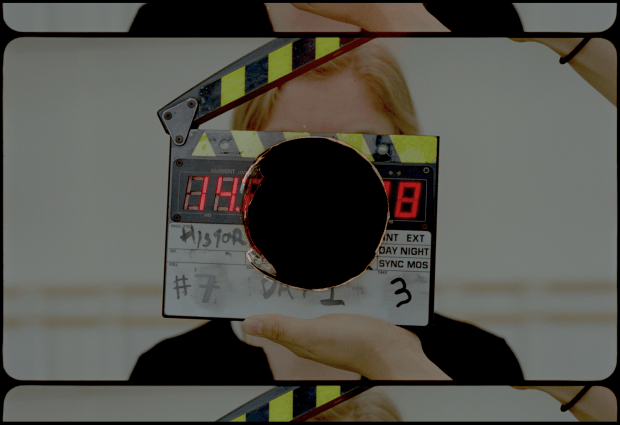
I entered your practice-led research through History of the Present, an opera-film which uses sound, voice, and film techniques to amplify marginalised stories about gender, class, and conflict in Belfast. The performance is made in collaboration with artist filmmaker Margaret Salmon and composer Annea Lockwood, and premiered as part of the official 25th commemoration of the Good Friday Agreement in Belfast in 2023, touring later that year to the Queen’s Hall to launch the Edinburgh Art Festival. Could you talk about the importance of collaboration in your practice, both across Scotland, and places with shared heritages and histories?
I have been lucky to collaborate in my research with many amazing folk, including those you mention above, ranging across many different disciplines, collaboration is essential to certain projects, always bringing feelings of joy and anxiety: learning to collaborate effectively, with respect, without compromise takes a lot of practice! I value editorial practice too, which is collaborative in nature, having founded The Happy Hypocrite, a journal for and about experimental writing and edited numerous publications: there is nothing more instructional as a writer than editing other’s work. Of course, I enjoy working alone too, the core of writing is a solitary, starting (of course) with the blank page.
You are also Professor of Interdisciplinary Writing at Duncan of Jordanstone College of Art & Design. What are you working on research-wise at the moment? And how has your work at the University of Dundee shaped your own practice, and approach to ‘working-classness as method’?
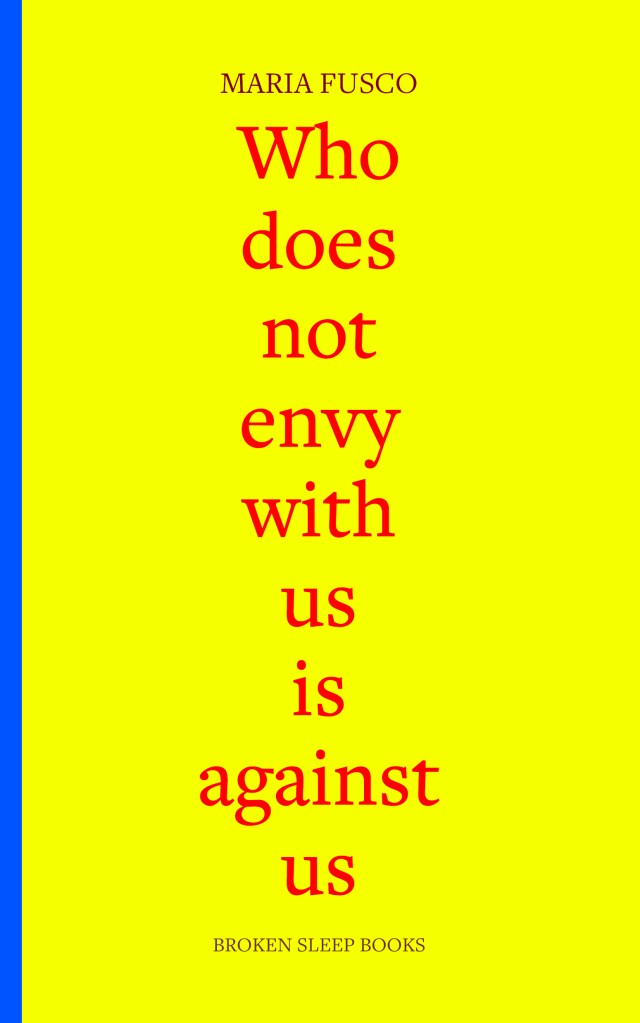
Building on my 2023 book of essays on working-classness as method, Who does not envy with us is against us, I am co-convening a Conference in April at Tate Liverpool with curator Beth Hughes. We see working-classness as method as an approach that addresses working-class experience, values and modes of knowledge as generative forms of understanding that resist institutional authority and challenge dominant hierarchies. We are inviting speakers to bring their voices, minds and hearts, to think through what the characteristics,uses and criticality of working-classness as method might be. We are not looking for answers, we are looking for refinements, for questions, for space for those, like myself, who identify as working-class. If anyone reading would like to submit a proposal, we’d be delighted to hear from you! The deadline is 30 January 2026 and the full details are here.
Maria Fusco is an award-winning writer of critical, performance and theoretical texts, and Professor of Interdisciplinary Writing at Duncan of Jordanstone College of Art & Design, University of Dundee. She is the new Director of Scottish Graduate School for Arts & Humanities (SGSAH). You can find more about Maria’s work here.
 SGSAH Blog