
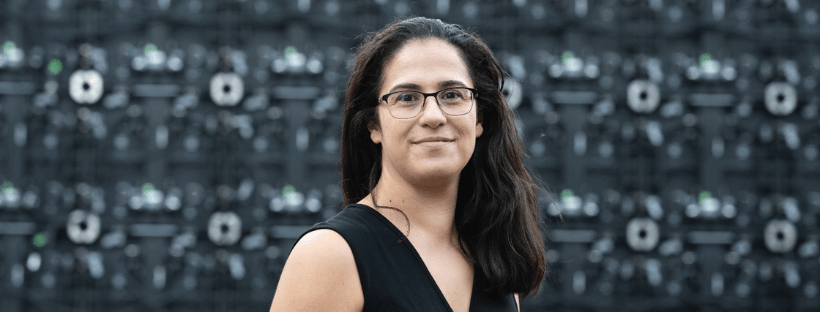
When I think back to my post doc research path, many factors have contributed to the development of my research career. I would say that what contributed the most was opportunity, collaboration, and exchange of ideas.
When I was finishing my PhD in contemporary art history at Sapienza, I stumbled upon an incredible call for a position as PDRA position in a very well-established research group. The title of the project was RewindItalia and was led by British video pioneer Stephen Partridge at DJCAD, University of Dundee. I applied and I started immediately after the end of my PhD, and this is how I delved into the world of early video history in Europe, getting to interview pioneers, view rare works digitised from obsolete formats and access the archives. I started exploring practice-based research methods, through curatorial practices, including curated screenings and re-enactments. At the end of my first PDRA post, I had noticed several commonalities between women artists using video in Italy and the UK. For women artists, both in Italy and in the UK, video was a key tool to explore those challenges and those fights that were emerging with second-wave feminism. In particular, they were exploring elements of gender equality, motherhood, an equal state of representation as professional artists, representation and the body. Both British and Italian women artists’ video works show the intimacy and approach to the medium that very much resonate, although the artists at the time had no knowledge of each other.
I tried to submit a Marie Curie application for a couple of time, but although I had very good feedback, both were unsuccessful. And then I had the opportunity to co-author an AHRC application in which I was included PDRA for EWVA, European Women’s Video Art in the seventies and eighties. The application was successful. During that project led by Elaine Shemilt at DJCAD (2015-2018; DJCAD). I had immense opportunities of conducting fieldwork and expanding on my practice-based research methods portfolio by co-curating performative platforms, performative screenings, exhibitions, and again, reenactment. The reenactment became a very important research tool, that gave me the opportunity to explore the knit and grit of early video artworks. After EWVA, I capitalised on information emerged ion REWINDItalia and EWVA and I took the lead as main author on the application Richard DeMarco, The Italian Connection. The application was successful and then I became a Co-Investigator (Co-I).

EWVA Book Launch, Glasgow Women’s Library, November 2019 (on the screen Lydia Schouten, Romeo is bleeding, 1982). Courtesy of Laura Leuzzi.
During all these projects, I presented at several conferences, wrote several papers and authored different chapters and edited books and had the opportunity to raise my national and international profile. What I realised led my research was really co-producing, co-designing the projects and exploring different methods around research (including practice-based methods).
Another important experience for me was being co-I on the RSE-funded research project, Digital Art and Activism, led by video game art pioneer Joseph de Lappe, University of Abertay. As part of that, we organized several different activities (some with SGSAH) and a major conference co-chaired with Professor Sarah Cook that gave me the opportunity really to familiarise to different perspectives and approaches as well as expanding my networks.
Two years ago, I got a new position at Gray’s School of Art part of Robert Gordon University as Chancellor’s Fellow. At Gray’s and RGU, I have found a very supportive environment for research and practice-based methods.
Here, I’ve had the opportunity for exchanges with colleagues, researchers, and to expand my research portfolio, to enhance my skills, to develop interdisciplinary projects as part of my umbrella project around digital art and activism where feminisms are a key component.
Through my fellowship I have had the chance to present at major international conferences (including Media Art Histories in Venice in 2023), curating exhibitions and screenings (in 2025 my screening Here and Now – which includes recent video works from the UK – was screened at Lo sguardo sospeso, part of the Ca’Foscari Short film Festival in Venice and Over the Real at MuSA in Pietrasanta), and lead public talks with major video pioneers (in 2024 I was in conversation with Icelandic artist Rurì at Tate Modern as part of Tate Modern Lates – it was a precious occasion to discuss some of her most pioneering video and film work; recently I was in conversation with intermedia pioneer Gary Hill at Ibrida Festival in Forlì – an incredible opportunity to explore some of his most famous works and talk about body, voice and relationship between text and image).

Incite, ed. by Leuzzi and DeLappe, published by Peacock and the worm (2023), designed by Neil Coral, at Gray’s School of Art Research and Practice exhibition, Aberdeen, September 2025, Aberdeen.
In Spring 2025 I started a new project about AI and feminisms. I developed the first phase (including literature review and contacts) as part of a hybrid visiting fellowship at the Icone Center at Vita Salute San Raffaele in Milan and I am currently starting a second stage, which includes interviewing artists and curators.
In Summer 2025 I gave my first keynote paper at Convergence Festival at Liver Art Ireland in North Tipperary: I merged performative approaches, creative writing and academic presentation and discussed how women artists have tried to reclaim their voice and visibility through performance and video. The positive feedback from artists and musicians attending the festival has encouraged me to develop this line of inquiry in the future.
As part of my new role, in 2025, we started a new chapter of the REWIND research portfolio with the AHRC-funded research project, RewindYugoslavia (started Feb 2025-2027), that delves into the early video practice in the former Yugoslavia. This project capitalises on the expertise of the PI, Jon Blackwood, an expert of Balkan art, and co-led by me and REWIND Media Archivist Adam Lockhart (DJCAD), with artist researcher and artist Dr Maja Zećo as post-doc researcher. For me, this has been a great opportunity to once again explore very rare, marginalized works and narratives around video. What I have learned about video art is that when we talk about the early days of the medium, there are some recurring elements, some recurring themes and some recurrent approaches in Europe that possibly dealt with the key elements that characterised video, but also about being made in a moment in time where some themes, some narratives were emerging or were specifically relevant in a specific geographical area or across countries. Therefore, I am excited for this new adventure and discovering more about this area and how that could lead possibly to new projects and ideas in the future.
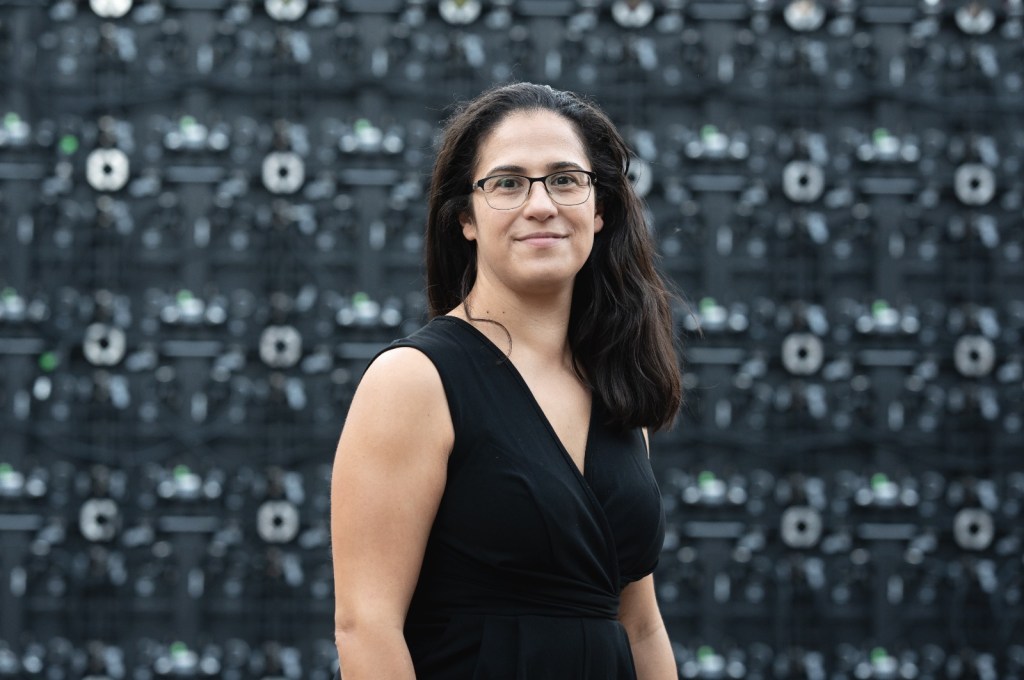
Ibrida Festival ph George Matei
Laura Leuzzi is a contemporary art historian and curator. Her research and curatorial practice are focused on early European video art histories, art and feminisms, activisms, performance, re-enactment and new media.
Currently, she is Chancellor’s Fellow at Gray’s School of Art, Robert Gordon University.
 SGSAH Blog