
Following the SGSAH Year 1 Residential in Stirling—and Burns Night—guest blogger Joshua MacRae leaps through the history of ceilidh dancing, his personal favourite dances, and what academics can learn from taking part.
People in Scotland have a long tradition of making time for fun at work events. The mid-fifteenth-century chronicler Walter Bower provides one example (vol. viii, 1987: 3). In August 1390, a large crowd celebrated several ‘days of festivity’ for the coronation of King Robert III and Queen Annabella at Scone. After the party-goers’ horses destroyed the nearby monastery’s crops, a persistent groundskeeper won compensation from the new king. Bower makes no mention of a ceilidh, but his readers today might recognise his call for sustainable and socially responsible living, when they take to the dancefloor at their own special occasions.
In Scottish Gaelic, the noun cèilidh means ‘visit’; the adjective, cèilidheach, means ‘companionable’ or ‘sociable’. The experience of coming together in good spirits can be an intellectual pursuit, as folklorist Alexander Carmichael describes in his introduction to Carmina Gadelica (vol. i, 1900: xviii):
‘The “ceilidh” is a literary entertainment where stories and tales, poems and ballads, are rehearsed and recited, and songs are sung, conundrums are put, proverbs are quoted, and many other literary matters are related and discussed.’
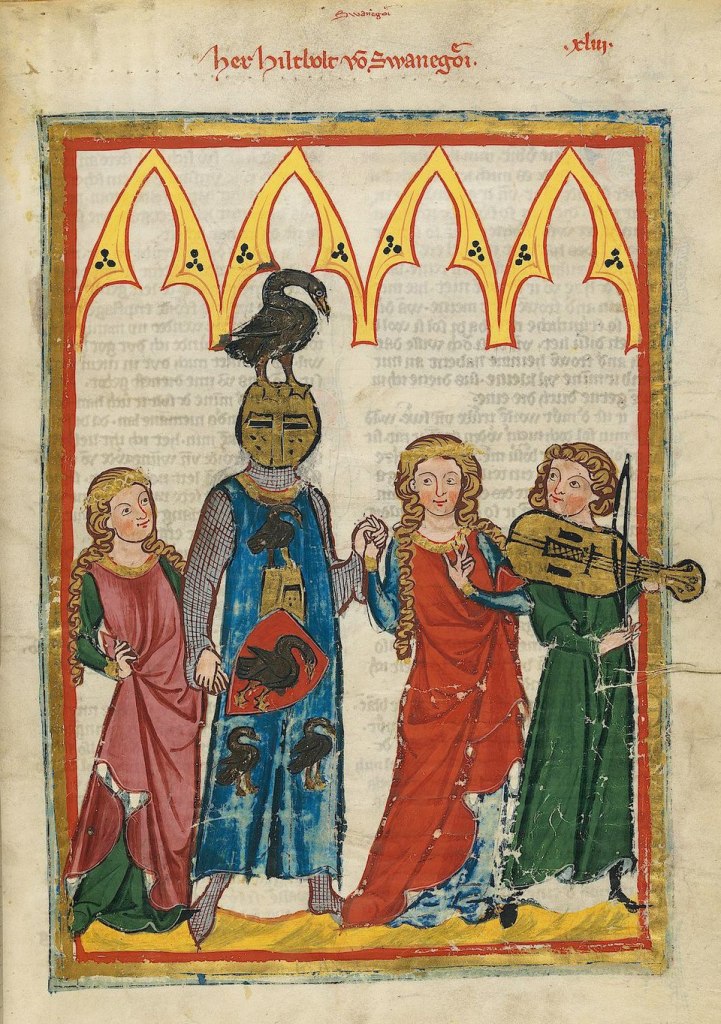
A scene of medieval dancers from a manuscript compiled primarily in Zurich, c.1300. Codex Manesse, UB Heidelberg, Cod. Pal. germ. 848, fol. 146r. Credit: Creative Commons.
Carmichael’s emphasis on study is largely absent from celidhs today – except around Burns Night, when the birthday Bard’s words introduce the dining and dancing. Attendees at the SGSAH Year 1 Residential in Stirling this year were treated to a rousing ‘Address to a Haggis’ and ‘Tam o’ Shanter’, from two of our own cohort.
PhD researchers can learn much from joining in a ceilidh. Consider these reflections on a selection of dances.
Gay Gordons
Convention dictates that this dance opens the ceilidh, which can reassure those finding their way. Witness the enthusiastic flail of beginning a PhD. You enjoyed the conversation with the person sitting next to you at dinner and convince yourself that good chat is a sign of good dancing. The awkward hold and abrupt turns may make you rethink your proposal, but remember that the night is young.
Canadian Barn Dance
You could have had a short and swift routine, repeated with the same partner. Instead, the band has chosen the progressive version, which changes the pairings at least once every minute. Dancers are left skimming a journal article and trying (failing) to catch an argument barely audible over the drumkit, before moving on to the next entry on a working bibliography. This introduction to the field is the literature review of social dances. Maybe you’ll remember at least one person’s name at the end of it.
Dashing White Sergeant
Counting to eight might be the difference between success and unmitigated disaster. Sets of three dancers move around the floor. They present to each other and then to another set, before scurrying to the next group, ready to start again. This performance has all the unhinged energy of a poorly planned conference and leaves one dancer – in the middle of each set – responsible for keeping a loosely themed panel together. Utterly exhilarating.
St Bernard’s Waltz
This gentle, contemplative sway offers a reprieve from the chaos of earlier dances. Gather your ideas with a slow step…two…three, and note what you find most interesting: stamp stamp. Embrace this apparently rare opportunity to be present with your own thinking, without retreating so far into your mind that you trample on your partner’s toes. You’ll be refreshed for writing up, after taking the time for stillness.
Strip the Willow
Veteran dancers will pace themselves throughout the evening, in the knowledge that this final rite awaits them. The top couple spins its way down the floor, alternating between themselves and the dancers forming two parallel lines. The final couple examines your efforts and rewards you with minor corrections. This fitting climax to the ceilidh will leave you sweaty and slightly dazed – but, if you’re still smiling, then surely it’s been worth it.
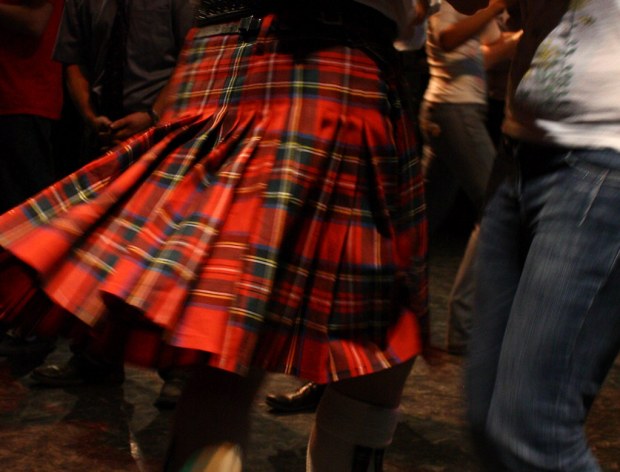
Credit: Scots Music.
When PhD research can seem solemn, solitary and often overwhelming, thinking with the ceilidh can suggest some useful alternatives.
The business of completing a PhD can allow space for having fun. Researchers may come for the workshops, but staying for the ceilidh can offer some much-needed distance – and a convenient workout – from the individual responsibilities of crafting a thesis.
A ceilidh can spark conversations to continue during a tea break the following day. An accidental pairing for a misjudged Military Two Step may have more in common than bruised shins.
Finally, and perhaps most importantly, the way to learning an elaborate dance is starting to count to eight. With a firm foundation, and frequent practice, ambitious steps can become manageable actions.
As you take the floor, take others with you and share a smile along the way.
Joshua MacRae is a first-year doctoral researcher in medieval Scottish history at the University of Edinburgh and the University of St Andrews. His AHRC-funded PhD project uses an analysis of royal family relationships to rethink power and political culture in the kingdom from the mid-eleventh to late-thirteenth centuries. You can find out more about Josh’s research here.


[like] Maria Fusco reacted to your message: ________________________________
LikeLike