
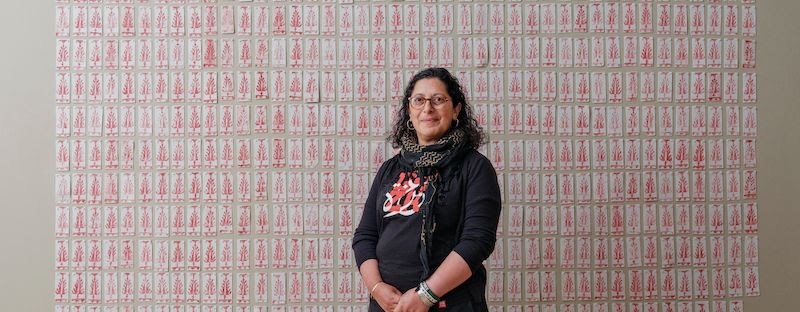
In the final contribution in the series from Cove Park in Scotland, guest blogger Leena Nammari reflects on their SGSAH-supported residency, and practice-based research about heartbreak and grief in Palestine.
Cove Park, a haven of tranquility and a space to breathe.
I had heard of Cove Park and had been envious of those who had managed to embark on a residency there. When I applied to SGSAH for a week there, I did not expect to be granted a place to breathe. Therefore, I was surprised and beyond joy to be offered one week to focus on PhD writing, essential after almost two years of attempting to achieve lucidity while following a live-streamed genocide of my people in Gaza and the continuing ethnic cleansing and destruction of the rest of historic Palestine. The subject of my practice-based PhD is looking at haneen – an Arabic term that encompasses the implied heartbreak and grief, utterly embedded in the experience of being, of (be)longing and sensibility as a Palestinian.
I packed my bag of clothes, checking the weather forecast – the end of September could be changeable, so I added extra blankets and scarves, not knowing how well the heating would work. And slippers. It is essential to bring slippers.
I stocked up on all the food items I could think of, including cheeses, peanut butter, bread, hummus, various vegetables and spices, naturally. I decided not to bring any meat, as I wasn’t sure what the cooking facilities would be like. I also packed four bags of wine gums, my essential writing lubricant. And knitting. My sock has to be finished. It has been a while since I visited that self-patterning watermelon sock. Not expecting to finish the pair, just one would do.
I had to think about which books to bring, how many I would need, what I would read, and what I might bring with me, only to return them unread.
Frantz Fanon, Edward Said, Susan Sontag, Paolo Freire, Vera Tamari, and Nabil Anani all piled into my flamingo wheely bag. I had more room than I thought, so I had to add more. I thought some poetry might work too in such an idyllic setting, so Mourid Barghouti and Mahmoud Darwish naturally slipped into the small suitcase. I also brought a book I wanted to reread: The Forgotten, by Raja Shehadeh and Penny Johnston.
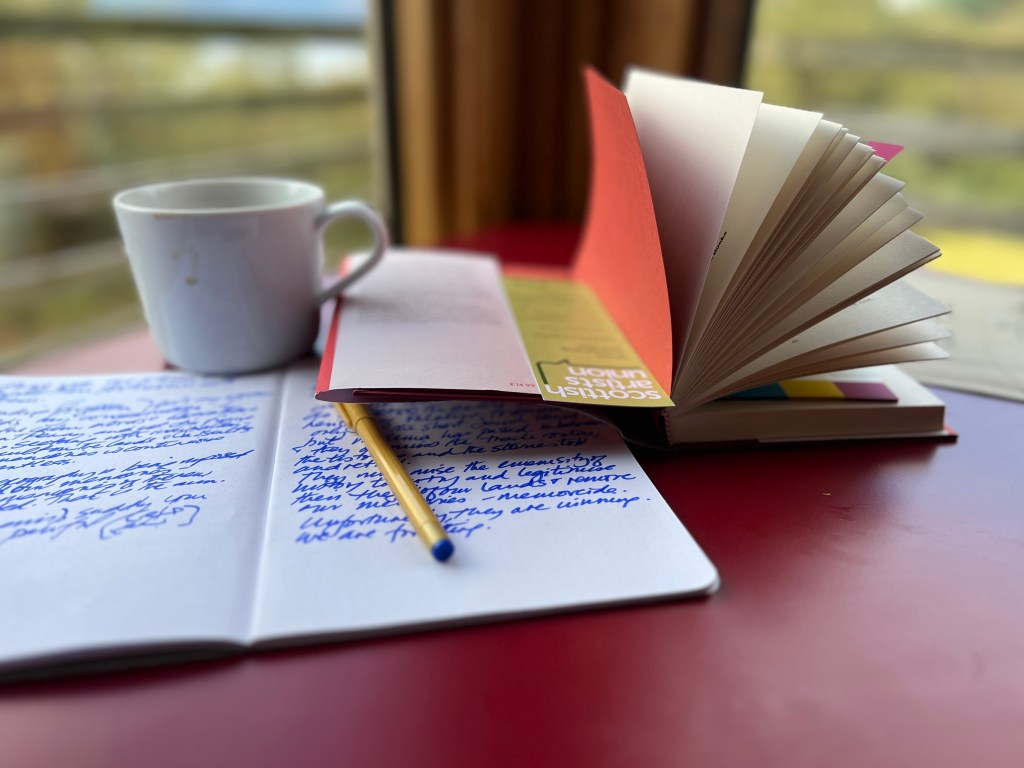
My plan was to have a skeleton of the thesis laid out by the end of the week, a table of contents sketched out, and something to build upon. I was not going to create any new work, not art-making, so I did not bring any art or printing materials. I did not take any sketchbooks, only lined notebooks and coloured pens in turquoise, pink, red and blue. And one brush pen, as a concession, since I can write, with added flourish, using a brush pen, while pretending not to draw.
And Cove Park delivered.
The weather gods were kind. Cold sunshine was on offer every day, filling the pod I was staying in. The evening skies were clear, and I saw the Pleiades, the Big Dipper, Orion and his belt almost every night. I read The Forgotten and made notes. I read most of The Wretched of the Earth and made notes. I dwelt on Mourid Barghouti and Mahmoud Darwish and sighed deeply. I allowed myself time to read without interruption. My everyday world felt very far away, though I was completely connected to the world through the internet and watched the live-streamed genocide; I allowed myself to read, to view, to write, to breathe deeply.
My work as an artist is about being in the world, a twenty-four-hour connection to it. There is no escape. My umbilical cord may be stretched, but it is not severed. Over the past couple of years, I have been presenting on Palestine as it relates to my practice, speaking at symposia and conferences about how my heritage is essential to my making. I have been offering workshops on Tatreez. I have been making people cry and laugh, and all the while, humanising the Palestinian. The week in Cove Park gave me that little bit of recharge. No one wanted a report. No one wanted me to perform. I did not need to put on a brave face or hold back tears or my fury. I could spend a week cooking, writing, looking at the stars, and eating the wine gums, including the red ones, which I do not normally like.
I started to feel anxious about leaving by Friday. I had two more days to get the table of contents together. Did I make it? I wrote something. It may not end up in the thesis, but it was a start. And I am grateful.
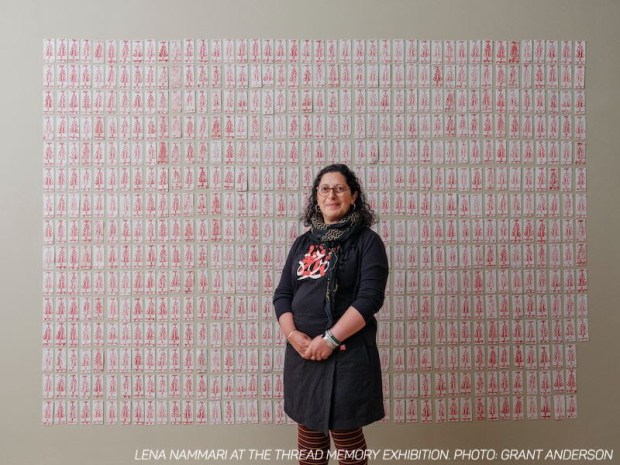
Leena Nammari’s work is on view in Thread Memory: Embroidery from Palestine, curated by Rachel Dedman, at V&A Dundee until 26 April 2026, and at the Palestine Museum in Edinburgh.
Leena Nammari is a Palestinian artist living in Scotland. She explores the role Haneen plays in collective cultural consciousness, its nostalgia and mythmaking, where tensions of longing/belonging function as catalysts in artistic and cultural dialogue for displaced communities. Using mainly photographic and diverse printmaking techniques, she creates artworks that explore lived, remembered, and mythologised experiences as visual responses to contemporary Palestinian literature, reflecting the search for home and longing. Her work draws inspiration from her homeland, the ancient city of Jerusalem, Ramallah, and the neighbouring hills, echoing years of living in and visiting a divided and suffering land. She is in the final year of her SGSAH-funded PhD at Duncan of Jordanstone College of Art & Design (DJCAD) at the University of Dundee. You can find out more about Leena’s work here.
 SGSAH Blog