
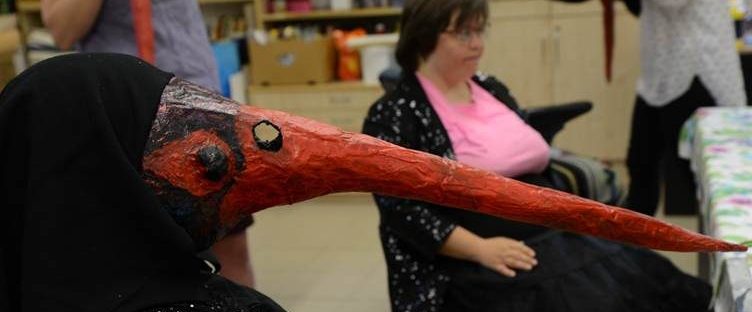
In the next post from the British Council Scotland SGSAH EARTH Scholarship Scheme series, guest blogger Marta Kucza details her experimental fieldwork in Estonia and Scotland.
I am a neurotypical person. I have learnt to engage with the world through the conventional use of words. The things I experience reach my consciousness through a language-like voice in my head. The way my perceptual and nervous systems are coupled allows me to take part with great ease in the majority of activities that the most dominant institutions structuring our lives offer or expect me to.
Over six years ago I started facilitating an experimental sound and film workshop for the residents of a supported living facility for adults labelled as having learning disabilities, and situated amidst one of the most picturesque forest ecosystems in south Estonia. I remember the overwhelming realisation of having a functional illiteracy of some sort. The forest was a sequence of unconnected elements, and the only continuous cognitive process that I could afford to understand it was to filter its specificity through the sensory apparatus of my body. Life was bustling with the presence of creatures and meaning-making processes that I was unable to read.
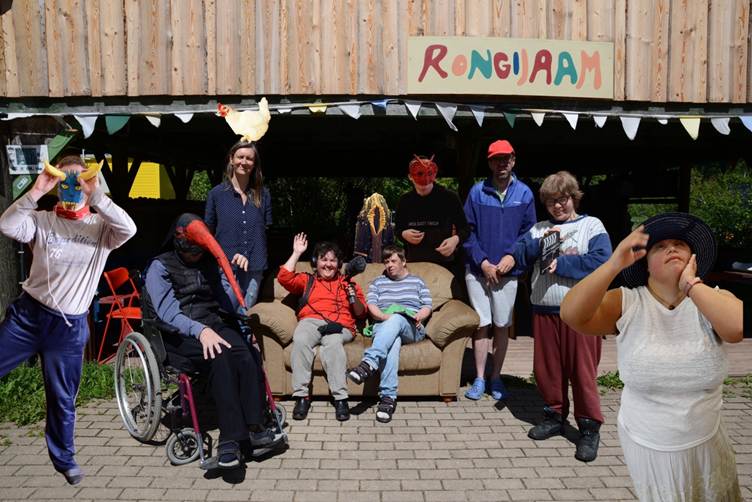
Maarja Küla Filmgroup. Credit: Liisa Kuusk.
With time I have noticed that, simultaneously to the deepening relationships with workshop participants, and with time spent in the forest, my attention to and literacy in non-symbolic meaning making, tacit knowledge and non-verbal communication have evolved. I started to think of the relationship between the body and its environment as not one of boundary, but, rather, contiguity.
My PhD research at the University of Tartu addresses the ecological crisis as a crisis of imagination and of impoverishment of modes of enquiry (Morizot, 2022), and of the exclusion of people labelled as having learning disabilities from knowledge production. The medical paradigm of learning and developmental disability, as well as the therapeutical framework of applied behavioural therapy consider neurodivergent expressions pathology and automatism. Neurodivergent expressions such as stimming or echolalia have been widely considered stereotypy, automatism, or error, bearing no potential meaning. As Julia Rodas writes (2018), autistic symbolic expressions have frequently been considered waste. The very concept of intelligence, its measures and the social practices drawing from it it, are not only based on the human neurotypical premise, but conceal other refined manners of making sense and learning. If we dare to move neurodivergent modes of enquiry from the place reserved for margin and exception, they will inevitably challenge what philosophy and cognitive studies have conceptualised as mind.
I look at some instances of neurodivergent expressions as ways of coming to knowledge and propose that they are ecologically embedded. I speculate, in a theoretical and artistic manner, on how neurodivergent modes of enquiry queer our knowledges of ecosystems. Ecosemiotics, the main discipline of my research, allows me to start with the premise that semiotic processes are not human-specific and not necessarily bound to language. My articulation is that they are not bound to neurotypical language use and neurotypical symbolic activity.
My fieldwork consists in shared experimental practice with the residents of Maarja Küla. Recording devices become our prosthetic tools to explore and embody the modes of existence of different animal and plant species. These are mainly practices of contact and contiguity that allow us to produce a bodily experience. We use contact microphones and hydrophones, embodied sports cameras adaptable to the participants’ mobility and aesthetic choices. One of our favourite practices is foley: recording sounds made with our bodies and everyday objects set to excerpts from nature documentaries.
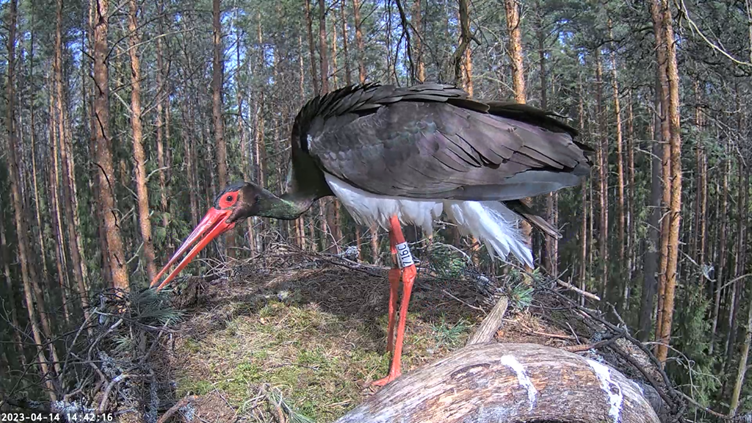
Still from footage recorded by the Estonian wildlife association Kotkalubi in a black stork’s nest. During foley sessions, we recorded soundtrack to the footage using our voices and objects. Credit: Marta Kucza.
We also speculate together on the worlds beyond language. We have been working on a science fiction film written together and set in the village, inspired by the local plant, animal and fungal species along with the sensory universes of the workshop participants. I plan to constitute a small enquiry group where, together with participants from Maarja Küla and researchers in environmental science, we could work on a local environmental problem.
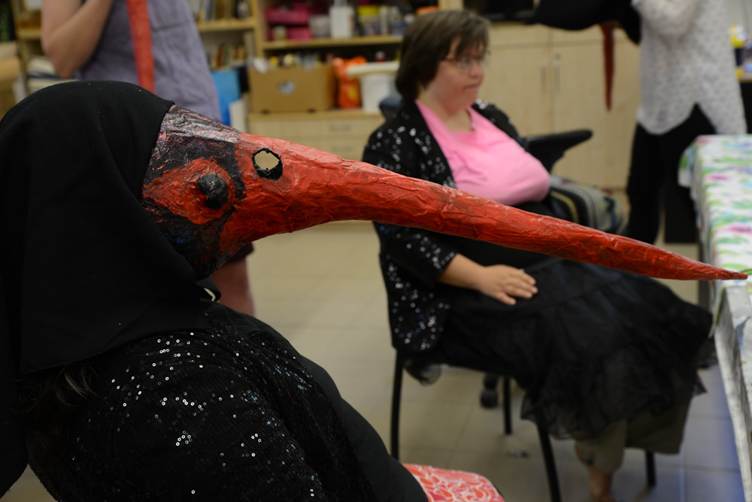
After the foley work, the black stork became a protagonist of the film and a theatre performed in the village. Credit: Marta Kucza.
The EARTH Fellowship allowed me to explore methodologies of participatory and community-based projects in STEM and environmental humanities. The questions that currently drive my work, and that the fellowship allowed me to articulate, are how do we make use of sensory data in research? Is sensible knowledge reducible to the orders of representation proper to academia, public education and policy-making? Can scientific data be transformed and made accessible through sensory forms of knowledge? What is ‘the common’ in these irreducible orders of representation if we think of knowledge-making as an unlimited community of enquiry, as philosopher Charles Sanders Peirce proposed?
Throughout my fellowship, I have been discussing with Dr Jen Clarke, the mentor of my fellowship and the principal investigator of the Agroforestry Futures project at RGU, the manners of working with different groups of participants who co-create knowledge. The problem that has been transverse both in her and my research projects is the translability of sensory knowledge.
The legacy of my EARTH Fellowship is a refined research setup and a political proposal. It matters how we design our learning process and whom we choose to be our learning companions. What if we addressed the growing cleavage between the scientific community accused of elitist practices and mistrusting ‘society’ not only through participatory data gathering or more efficient communication of research findings, but also through shared learning?
The EARTH Scholarships Impact Symposium is at the University of Glasgow on 22 April 2026.
Marta Kucza is a documentary filmmaker interested in practices that explore relations of proximity with the filmed subjects. As a film workshop facilitator, she has been looking for experimental techniques that liberate our perception from automatism, such as estrangement, where camera and sound recording devices help to understand and engage with the worlds beyond the film frame. She is trained in African Studies (University of Warsaw) and Visual Anthropology (Sound/Image/Culture in Brussels). She has been working also as a film curator, namely for the Riga Pasaules Film Festival screening ethnographic and experimental films. In her current research project at the Department of Semiotics, University of Tartu, through an interdisciplinary perspective combining ecosemiotics, ethnography and art-based methods, she explores non- symbolic knowledge of plants and animals in Maarja Küla, an Estonian supported living facility for neurodivergent adults. Her British Council Scotland SGSAH Earth Scholarship was realised in partnership with Gray’s School of Art at Robert Gordon University (RGU) in Aberdeen in 2025. You can find about more about Marta’s project here.
 SGSAH Blog
One thought on “Learning about Ecosystems through Neurodivergent Modes of Enquiry”