
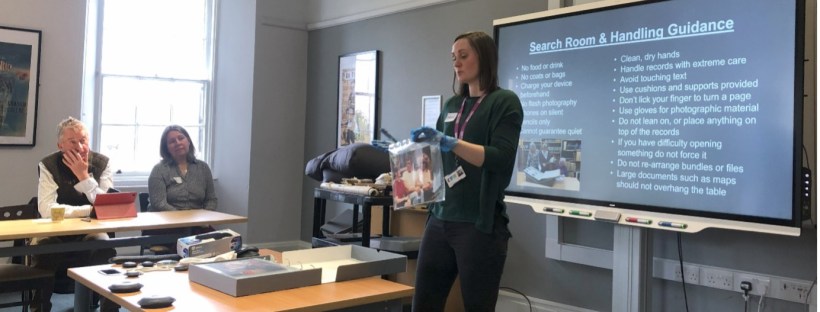
‘Hands on the Treasure Troves’ was a SGSAH CDF-funded event held on 26 October 2023. It was supported by Culture Perth & Kinross and the University of Aberdeen. What follows here are highlights and reflections from the CDF event-running experience.
Words by the organisers: Katie McClure (University of Glasgow), Siân MacGregor (University of Aberdeen) & Lucy Szemetová (University of St Andrews).
(Image credits: Lucy Szemetová 2023 and images of objects by permission of Culture Perth & Kinross)
Background to the event
In 2021, at the beginning of our PhDs, a small group of us were involved in a reading group centred on archival theory and methodology, facilitated by Lucy whose interest and expertise stems from her doctoral project in film. In the group, we discussed and shared our experiences of archives and how COVID had made some of us feel a little apprehensive about approaching and accessing the materials held in archives, along with enthusing and connecting over the use and attraction of archives to us as researchers and archive devotees. We met online, with a vague aim to gather at archives in the future.
Around the same time, Siân was by chance in touch with Culture Perth and Kinross [culturepk.org.uk/archives], the body which oversees the local archives of the region, in order to deposit some materials pertaining to the area on behalf of a friend. There, Siân was very taken by the space and facilities, especially as pandemic restrictions (and reliance on the digital) were finally beginning to lift: it was light, spacious and warm, seemingly filled with intriguing items, stories and history. Ishbel, CPK’s Archivist, and Sarah the Assistant Archivist were supportive, enthusiastic and generous with their knowledge; together, the idea came about of running an event to help demystify and reveal something of local archives, through SGSAH connections and support, based on the initial wishes of the archival group. Perth was a particularly good location as it was quite central to the network of SGSAH institutions; anecdotal evidence told us that local archives were often overlooked; fellow researchers told us they still felt uncomfortable in many respects due to the effects of covid restrictions. These elements felt like a good basis on which to build an event.

So, in October 2023 this eventually came to fruition when, following a successful application to SGSAH’s Cohort Development Fund, we were enabled to co-host a day focussed on accessing local archives, at the Perth and Kinross Archive, inside the wonderful AK Bell Library.
The event itself
The day began with a short but reassuring lecture from Sarah about the different types of archive, where to start – and what not to believe when it comes to preconceptions (or TV shows).
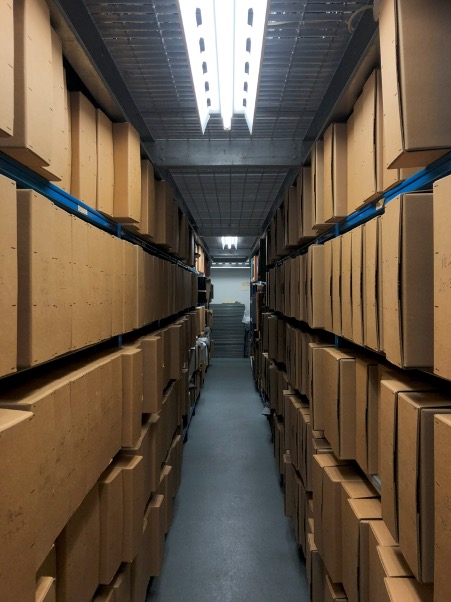
We then had a tour of their expansive store room (purpose-built in the 1990s with 20 years’ expansion space) led by Claire, and a discussion around the Local and Family History archives with Stuart, and how these are used and organised by visitors and researchers. Maps and index cards were plentiful and – of course – painstakingly ordered. The fascinating stores contain objects dating from the 13th Century all the way up to recent acquisitions waiting to be described and catalogued by the multi-skilled (and over-tasked) staff.

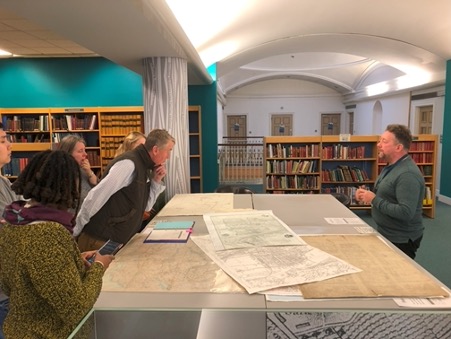
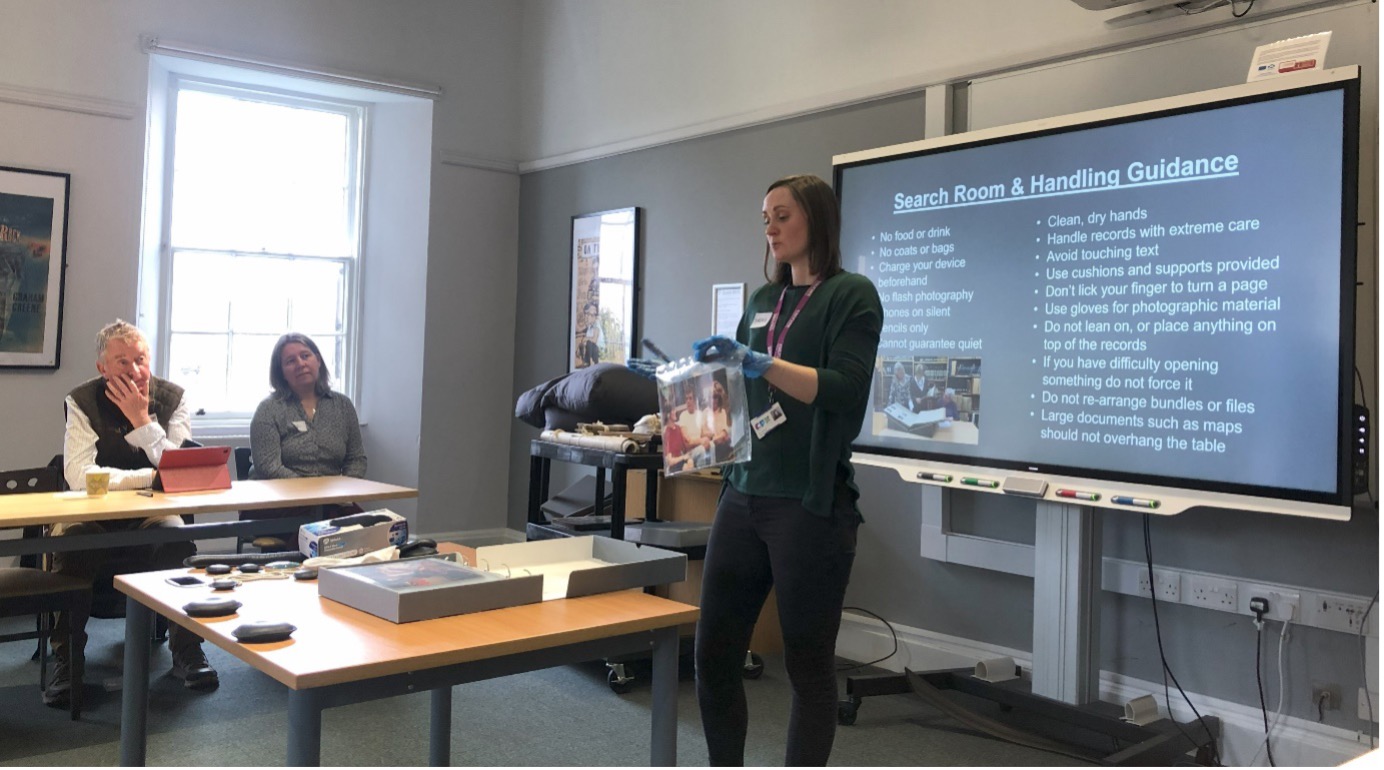
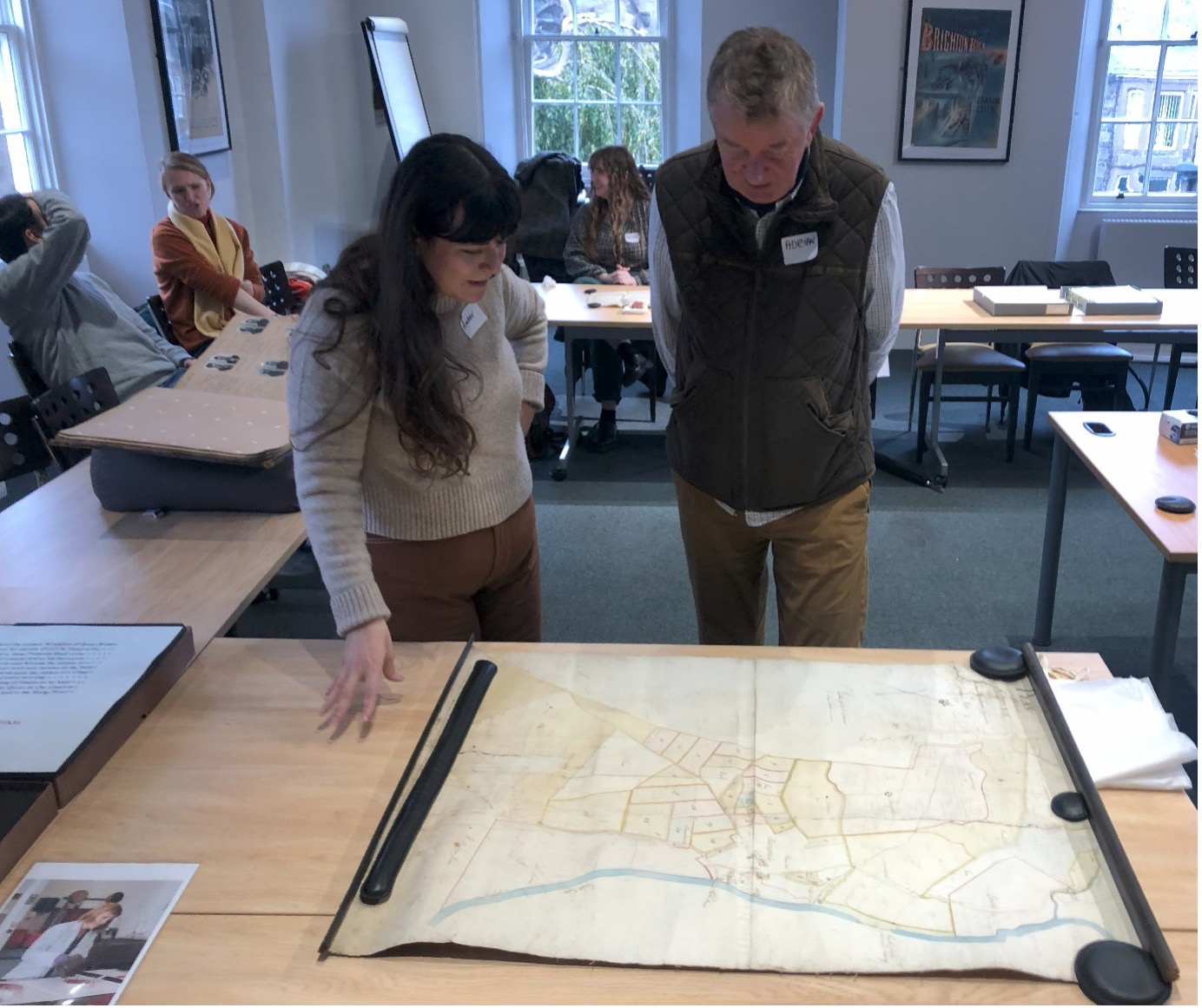
Sarah led the room on an object handling demonstration where she exhibited the more traditional materials and how to safely examine them – largely books and paper objects – before moving on to lesser discussed, more unusual handling skills and items, including delicate glass slides, and folded ancient documents attached to their original seals.
In the afternoon session, we had the opportunity to do some close looking at some of the objects including: a large scale volume containing photographic and conviction records from Perth & Kinross Constabulary from 1937-1943, 1983 production photographs from Perth Theatre, glass plate negatives of aircraft parts from David Gorrie & Son, a map of the Estate of Blairgowrie and much more.

These archives facilitated a brilliant group discussion about the benefits and drawbacks of archive digitisation, especially as this was conducted whilst being surrounded by the original objects with all their textures, smells, and almost an aura of their own provenance. The general feeling was that the materiality of archives often brings us closer to the objects and understanding them in their original context; however, equally, digitisation was an essential part of widening access and encouraging participation with archives. We spoke about the varying challenges and questions facing different types of archives (e.g. maintaining and protecting physical items and access in sound archives in times of changing technology), and how the ‘transactional’ nature of using digital archives is altering not only the way we research, but also its possible scope, and how we discuss our research. Frank and interesting discussions about the scale and benefit of any digitisation project were shared, and how under-resourcing and changing roles and expectations make it challenging for local archivists to keep up with their core, legally-obligated roles, while also balancing the additional need for digitisation, outreach and development.
Feedback from the event was very positive, and comments included the words valuable, friendly, enjoyable, informal and stimulating. Overall, the importance of events such as these was noted, for interaction with archives, contact with professional enablers such as archivists, and for meeting other researchers in Arts and Humanities, as researching can sometimes feel like a solitary pursuit. The contribution of researchers from a cross-section of Arts and Humanities disciplines, with differing levels of experience with archives brought diverse perspectives, ideas and input to the discussion, making this an ideal situation to explore these indubitable treasure troves.
Special thanks to the Archives and archivists of Perth & Kinross Council, to SGSAH for funding and advice and the University of Aberdeen for administration.
The SGSAH Cohort Development Fund (CDF) aims to support SGSAH doctoral researchers to work collaboratively to develop and improve doctoral training across Scotland, by funding them to develop/deliver unique, innovative training events for doctoral student across Scotland. The application process is simple and there are three submission deadlines per academic year. Find out more: sgsah.ac.uk/cdf.
 SGSAH Blog