
Previewing their SGSAH-supported event in Glasgow in April 2026, guest blogger Sara Guidi considers the environmental meanings of storytelling through the lenses of gender studies and diasporic narratives.
How do memories fit in the world? How do they transform over time?
I have walked up and down Via Cupa Vecchia in Naples many times while heading to the house of Silvana Campese, a member of Le Nemesiache. From the 1970s onwards, the Neapolitan feminist group merged the political struggle with artistic practice. The giant tuff wall enclosing Via Cupa Vecchia silences the dominant urban soundscape; the vegetation, overtaking the street’s surfaces, makes the sounds of insects and birds almost visible. When does the act of listening enable us to see someone or something? How many ways are there to listen to the multiple voices who inhabit the world?
In ancient Rome, the Cumaean Sibyl was a prophetess who communicated fate by singing or by tracing it onto fragile oak leaves. Her messages were often perceived as undecipherable within the dominant system of linear knowledge due to a spell cast by Apollo, who did not accept the Sibyl’s refusal. In Le Nemesiache’s enquiry, the Sibyl became a symbol of those women* violated by the patriarchal system. In fact, the Sibyl’s experience is always narrated by others, while her own voice is barely heard. Carved into the Phlegraean Fields, a volcanic area characterized by bradyseism, the Sibyl’s original site is now almost abandoned – a void in human history that has become a shelter for vegetation and other animals.
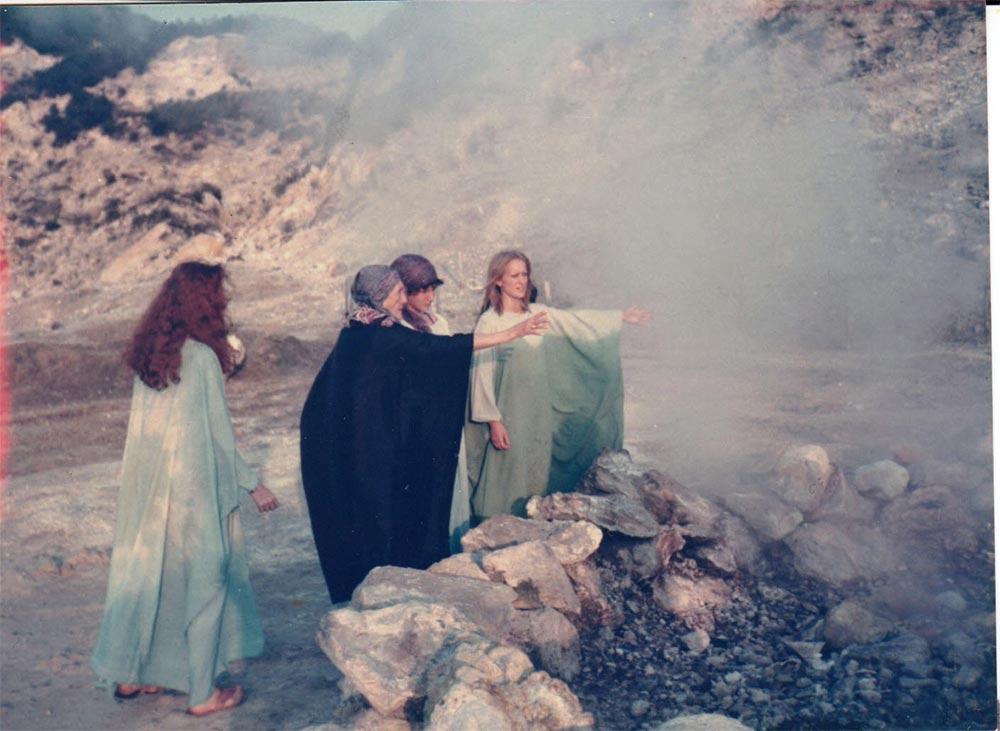
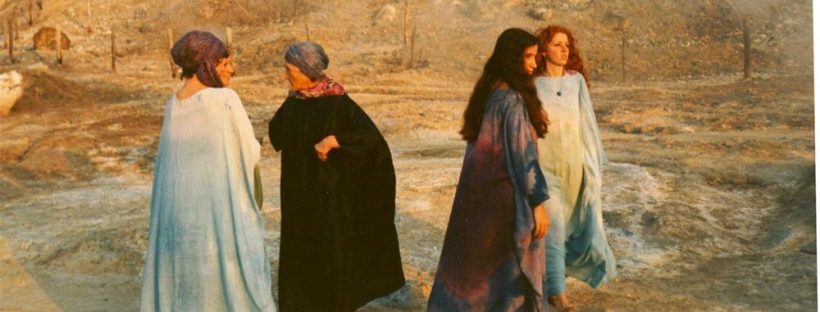
Le Nemesiache, the Neapolitan feminist and pacifist artists’ group.
In March 2023, Fausta Base (a member of Le Nemesiache) and I brought our mouths close to the entrance of the Sibyl’s cave. Our voices echoed through the space, cycling back again and again – we wondered if our echoes could carry the Sibyl’s voice back. Le Nemesiache’s movie Le Sibille (1977) is a journey through the Cumaean landscape to find the Sybil’s voice – by listening and learning her language, through dance and gesture. Following Le Nemesiache’s words, forgotten stories ‘are buried in the depth of memory: of the sea, the fire, the soil, the air’; once they are brought to life again, they become a field of imagination that generates new stories, new identities. Feminist practices rely on the act of listening and are grounded in the substance of bodies.
Listening require at least two poles of interaction, reclaiming a space of embodied encounter where exploring the self and the collective. ‘Salivate, secrete the words. No water, no birth, no death, no life. No speech, no song, no story, no force, no power. The entire being is engaged in the act of speaking-listening-weaving-procreating. If she does not cry she will turn into stone. Utter, weep, wet, let it flow so as to break through (it). Layers of stone amidst layers of stone. Break with her own words’ (Trinh T. Minh-ha, Grandma’s Story, Silver Press, 2025, p.17).
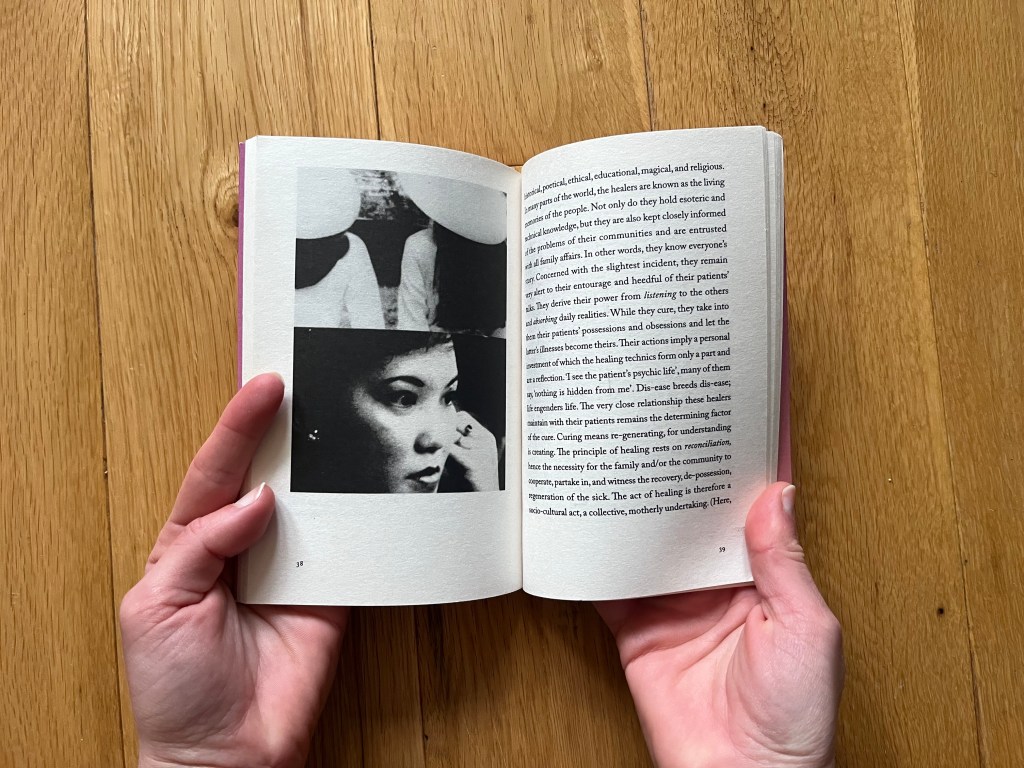
Grandma’s Story, Trinh T. Minh-ha (2025).
Passing down stories from one another requires gesture, breath, sound and silence. What is the embodied substance of a story? A transmission generated by the dance of tongues, lips, gestures – carried by bodies of flesh, of water, of soil and transformed by the passage of time and intentions. Directed by Sara Shin, Weaving Timelines is a collective ritual that explores the significance of storytelling, following the words of Trinh T. Minh-ha’s book, Grandma’s Story. The workshop asks: What stories do we tell? What stories tell us? And how might we speak with those who came before? In a shared space, we will give time to each story, each memory, allowing them to resonate in our mouths and in others’ ears.
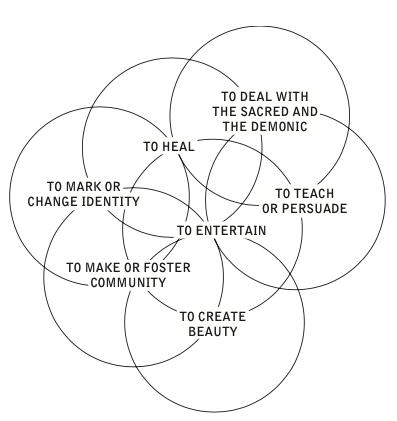
The seven interlocking spheres of performance. Drawing by Richard Schechner.
Memory can be grounded and variable at the same time – in this dichotomy lies its transformative nuance. Vashish Soobah’s video installation, Perles fannées par tours (2024), is a journey from Mauritius to Italy and from Italy to Mauritius, where personal and collective memories intertwine. Born in Catania to Mauritian parents, Soobah did not directly experience the Mauritian diasporic journey firsthand. Yet, his memories are shaped by sugarcane fields, séga rhythms, songs passed down by his parents during childhood. Storytelling becomes a way of navigating the world and sharing it with others; it generates new words, images, and sounds that resonate across contexts. Perls fanné par tours explores the sense of belonging through stories which are carried by human voices, gestures, and the sea.
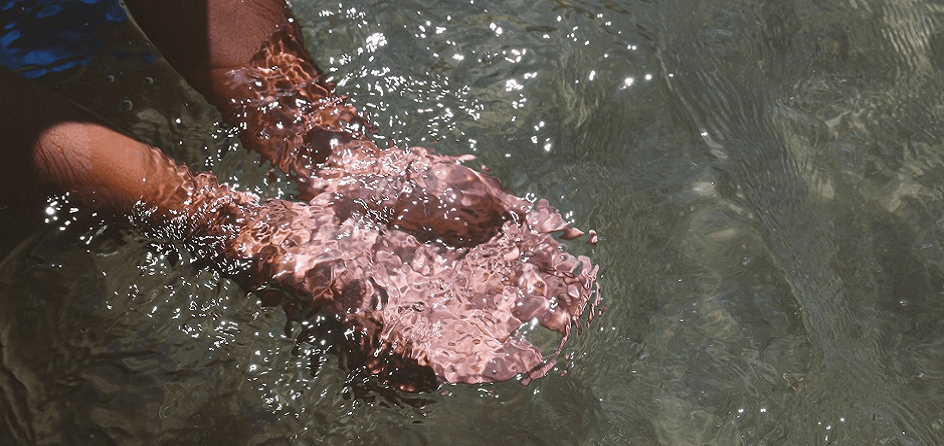
Still from Perles fannées par tours, Vashish Soobah (2024).
Storytelling is a way to navigate the world and share it with others; it also allows others to generate new imaginaries. Perls fanné par tours investigates the transformative potential of memory: we listen to our ancestors to ask ourselves what kind of ancestors we want to be.
Like Ancient Drops In Future Tides, part of the Thinking Culture Programme 2026, is at Civic House in Glasgow on 11 April 2026.
Sara Guidi is a independent curator, pursuing a practice-based PhD at the University of Glasgow. She is currently in the cohort of Postnatural Independent Programme 2026, offered by the Institute for Postnatural Studies in Madrid. Her enquiry focuses on the intersection of feminist consciousness-raising practices and the semiotics of memory, combining insights from gender studies and a ecocritical perspective. Through performance and storytelling, she explores how memories are transmitted, preserved, and transformed between humans and the more-than-human. You can find out more about Sara’s work here.
 SGSAH Blog