

This week, international PhD Researchers David Ogoru (USA) and Zahra Tootonsab (Canada) wrap up a three-part series reflecting on the 2025 EARTH Scholarship Programme. Through their respective research practices, David and Zahra unpack the side effects of merging disciplines, which can often result in ethics and care falling by the wayside…
Research on the Anthropocene has evolved. In one vein, the celebration and foregrounding of difference, whether based on race, class, gender, the non-human or more-than-human – or expressed through critical engagements with the many ‘isms’ that appear in Anthropocene scholarship – has become common. One factor contributing to the apotheosis of difference in the discourse on the Anthropocene is the tendency for scholars to incorporate diverse disciplines, cultural ideas, and epistemologies. Programmes like SGSAH’s EARTH Scholarship embody this move, offering a model for how interdisciplinary collaboration can shape discussions on human-driven impacts of climate change, both political and otherwise. As scholars from diverse backgrounds and disciplines, we entered the EARTH Scholarship Programme already engaged in interdisciplinary approaches through our individual projects. Yet, throughout the program, we found ourselves asking: how can we avoid the pitfalls of generalisation in our interdisciplinary work? And how can we ensure we do not romanticise, speak over – or for – our respective communities?
Zahra’s Take: Community Practices, Interdisciplinary Tensions
I have found the programme’s collaborative approach deeply enriching, particularly in how it has helped me reflect on what it means to ‘shelter with kin.’ In a rapidly changing world where climate catastrophe is fueled by capitalism, war, and the relentless pursuit of imperial profit, how do we relearn to create forms of shelter (literal and metaphorical) that are rooted in collective care rather than individual survival? My work explores the concept of shelter-making as practised by the Bakhtiari nomads, who are Indigenous to southwest Iran. Yet I continually ask: how do I write about Bakhtiari sheltering practices without becoming a spokesperson for the community? This is a central tension in interdisciplinary work within Western academic and colonial settings: the risk of speaking for rather than with.
Our Bakhtiari Shelter
Without careful attention, even well-intentioned research can become extractive and reduce complex, lived practices. This awareness shaped the design of my EARTH project. Through an Instagram collaborative community page called “Our Bakhtiari Shelter,” I invite Bakhtiari people, both from the diaspora and within Iran, to share their own creative expressions and reflections on what it means to shelter. Curated content on this page will be a living archive of collaborative sheltering ‘out of place’. This ‘out of place’-ness is not always chosen; it reflects histories and ongoing realities of displacement, where shelter becomes both resistance and a site of collective resilience, often sustained through interdisciplinary, ethical, and creative collaboration.
David’s Take: Foregrounding Nigerian Coastal Histories
As an African historian interested not just in environmental pasts but also in the histories of science and technology, my work sits at the intersection of disciplines in the sciences and humanities. Being part of the EARTH Scholarship Programme has also drawn my attention to other disciplines, and the politics that underlie utilising these disciplines to centre communities. This aligns with my Earth Scholarship project, which partly explores the politics of knowledge around the environmental history of coastal Nigeria. I am concerned with why – aside from the dominant urban history of Lagos – resource histories seem to dominate the narratives and research about other coastal areas, often rural in Nigeria, to the extent that the region has become synonymous with death, decline, and degradation.
Languages of Care
In trying to unpack and resist this obsession with resource histories and offer, through the lens of water, an alternative grounded in the realities of people who dot the Nigerian coastline. I struggled with how my interdisciplinary efforts might be generalising and romanticising the experience of local communities. For better or worse, one of our means of communication is through words and writing, so language is essential, and care must be embedded in said language. However, the language of care is and should not be romanticism. In trying to foreground people/cultures that offer alternatives to dominant ways of knowing, doing, and relating to the environment, we often slip into valorising their qualities as opposed to those of the ‘other’. The language of care should recentre marginalised communities, but with a consciousness of their problems, weaknesses, and the ways and means by which they re-appropriate socio-cultural tools as their environments change. Truth hierarchies trap us. Care in research should fundamentally hold the principle that truth should not be a zero-sum game.
Collective Reflections
Differences can be politicised, undermined, problematised, and even unhelpful. This is not a novel intervention or insight; rather, it is an attempt at reflection, to ask questions that might not necessarily have answers but demand saying as we think through the current age and imagine alternative futures. The success of merging disciplines, we suspect, has a lot to do with our collective distrust/resistance to master narratives: ones that favour colonial-capitalist stories and/or obscure the complexity of life. While we disparage the master narrative, attempts to merge insights from different disciplines without an ethical place and space for engagement can render these various perspectives, stories, and practices harmful and counterintuitive to interdisciplinarity. During a workshop at St Andrews Botanic Garden, for example, the work of Unangax̂ scholar Eve Tuck was introduced without acknowledging her positionality or the community context of her Indigenous scholarship. A critique of “damage-centered” research was generalised, ignoring “the frameworks that position these communities as damaged.”1 This erasure underscores the dangers of engagement without care. If we are to deepen connections to place through writing and interdisciplinary methods, as we have briefly shown through our respective projects, especially with Indigenous and minority knowledges, we must invest the time and responsibility such work demands. The SGSAH Earth Scholarship Programme has reinforced for us the possibilities of attending to climate change collaboratively and creatively, but also the need to remain critical about the risks of oversimplification and appropriation. We understand care as shaped by historical and political/cultural formations—which is why context matters—and as evolving through, or moving with, the ethical and creative processes of learning. It is through this movement that we can begin to unbind ourselves from the colonial-capitalist infrastructures that make our work extractive and uncaring.
This is the final entry in a series of pieces provided by participants of the EARTH Scholarship Programme for 2025.

David Ogoru (he/him) is a second-year PhD student in the history department at Brown University in Providence, Rhode Island. David’s research interests primarily revolve around the environmental history of Nigeria and West Africa. He is interested in multispecies collaboration and the place of colonialism, science, and aquatic environments in the history of West Africa.
You can follow David’s research through the following channels:
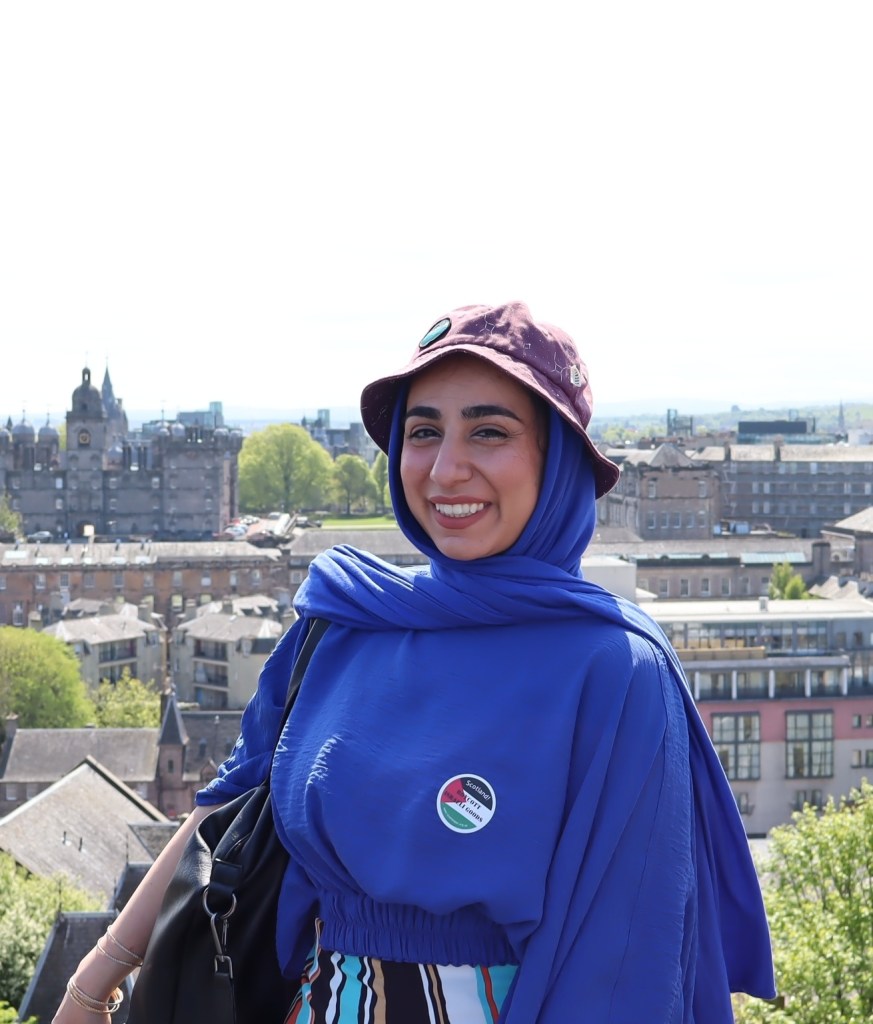
Zahra Tootonsab is a Ph.D. candidate in the Department of English and Cultural Studies at McMaster University. Her research explores how decolonial sheltering and living can address the global climate crisis, drawing on the weaving, oral, and artistic traditions of Indigenous peoples in so-called Canada and Iran.
You can follow Zahra’s research through the following channels:
- Tuck, Eve. “Suspending Damage: A Letter to Communities.” Harvard Educational Review, vol. 79, no. 3, 2009, pp. 416. https://doi.org/10.17763/haer.79.3.n0016675661t3n15 ↩︎
 SGSAH Blog