

This week, a group of Scotland-based postgraduate researchers – Cameron Flint, Phil Gould, Roslin Kerr, Nathan MacLennan, Pat Mason, and Tane Moorhouse – take over as guest bloggers, sharing their tips and tricks for anyone thinking about starting a student-led research network…
I know what you might be thinking – building a PGR network sounds like a lot of work and a time commitment. ‘I have a thesis to write!’ ‘What’s in it for me?’ Valid questions, indeed. Building a cross-disciplinary PGR network is not as difficult as it might sound, and the benefits are worthwhile.
Working as a postgraduate can feel isolating at times. Having a network of fellow researchers in your field of interest provides a sense of belonging as well as encouragement to pursue your ideas – not to mention accountability in seeing them through! Sharing your work in a friendly, low-pressure environment helps you build confidence before conferences or vivas. And while organising a network and regular meetings all sounds like extra work, building connections and engaging with your peers are invaluable transferable skills for a career as an academic or in any other industry. Being part of a network can help you connect with wider academic communities, potential collaborators, and even funding opportunities.
So, without further ado, here are some of our top tips for setting up a PGR network:
You don’t need a formal structure to begin – just a shared interest
Whether it’s a time period, theme, or method, find a common thread that brings people together. Our Scottish 17th Century Research Group was born out of a shared desire to connect with our fellow PGRs in a field of research that we believe doesn’t get nearly enough airtime. Seventeenth-century Scotland was a period of tremendous political, constitutional and social upheaval. It witnessed a dynastic union, civil wars (both at home and abroad), two separate constitutional settlements, religious disputes, and a military occupation. There’s plenty to talk about!
Keep it cross-disciplinary
Invite researchers from different disciplines. Our group is open to postgraduates from history, literature, religious studies, archaeology, material culture, etc. This sparks fresh perspectives and unexpected connections. And for a time period as complicated as seventeenth-century Scotland, perspectives from different disciplines are invaluable in stimulating new ideas. We began by contacting leading academics researching seventeenth-century Scotland at universities across Scotland, and we published information about our network in PGR newsletters and message boards.
Make it regular, but flexible
Our group meets monthly, but there’s no need to overcommit. We find that having a fixed date each month helps maintain momentum, but attendance is not mandatory. Keep it informal and adaptable to members’ needs and schedules. It’s also important to offer both online and in-person meetings. Our group members are based in different locations around Scotland, so having online or hybrid options is a necessity. When it comes to agendas, our preference is to focus only on one or two key talking points, such as future plans for conferences or day trips to historical sites of interest. Some meetings are just us catching up on our research and using the opportunity to ask questions if we are experiencing challenges.
Invite guest speakers
Bring in someone to talk about archival tips, digital tools, writing skills, or publishing. Our group has invited leading academics who have published research in the seventeenth century to chat about their experience researching this era. Having guest speakers can add value for the participants and helps to build further connections for your network.
Document your journey
Whether it’s a blog, social media, or conferences, sharing research or the activity of the network helps others learn from your experience and gives your group visibility. You can read more about our research on our Substack page: @scottish17thcentury and we will be presenting a roundtable talk at one of the Early Modern Work In Progress (EMWIP) seminars hosted at the University of Glasgow on 26th January 2026. In the future, we intend to host our very own conference (hopefully in a seventeenth-century historical venue!).
Meet our Scottish 17th Century Research Group!
Cameron Flint
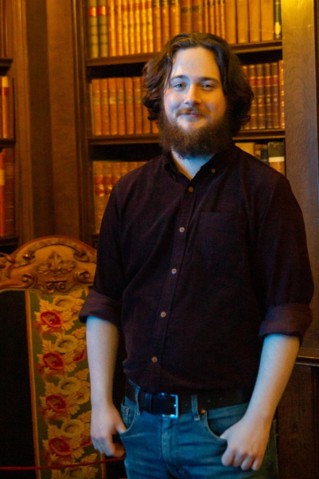
I’m a second-year PhD at the University of Aberdeen, funded by the Donald Withrington Scholarship. My research explores Scottish military development from 1652–1714, addressing the historiographical gap between the Battle of Worcester (1651) and the Jacobite Wars. My thesis examines Scotland’s military presence at home and abroad, both within and beyond formal government structures. I’m particularly interested in the officer corps of the emerging domestic army: Who received commissions? Who was excluded? How did those within the army relate to each other, and how did they behave? These are the questions I hope to answer in my research.
Phil Gould
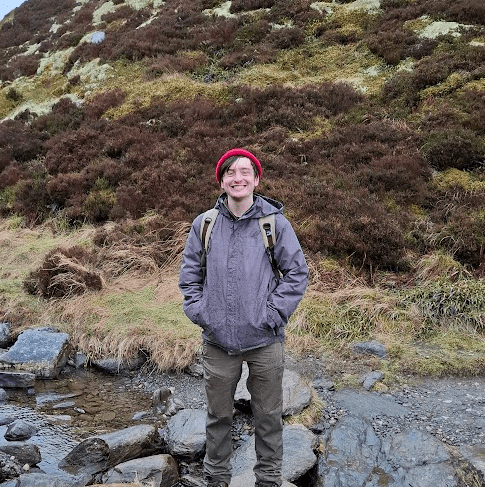
I am currently based at the University of Glasgow finishing an MRes in Archaeology. My research interests are in environmental archaeology, particularly focused around the late-Medieval to early-Modern period, and upland rural communities’ adaptation to climatic and social events. I use palaeoenvironmental records to understand past land-use change and use these records to aid future landscape management and understanding human-ecological relationships through time, alongside historic and archaeological data. I will be moving to the University of Stirling in the near future to start a PhD on changing land-use in the north-west Highlands, funded by the Centre for the Science of Place and Memory.
Roslin Kerr
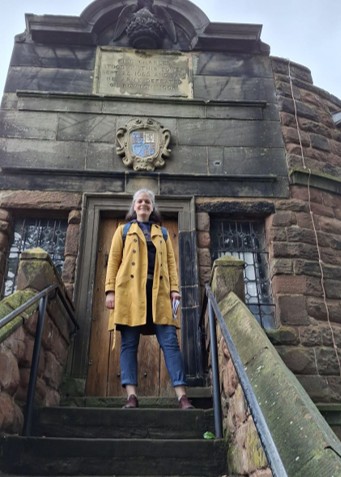
I am a SGSAH-funded postgraduate researcher at the University of Glasgow. My research focuses on constitutional history in seventeenth century Scotland, with a particular focus on consent and popular political engagement, and its relation to the sovereignty of the people.
Increased calls for consent arose as Scotland navigated the 1603 regal union, highlighting the need to reassess the role of public engagement in the political transformations of this period. Paradoxically, increasing demands for consent from the people were accompanied by rigorous efforts to control public opinion. The seventeenth century is therefore a critical time period in understanding modern constitutional theory.
Nathan MacLennan
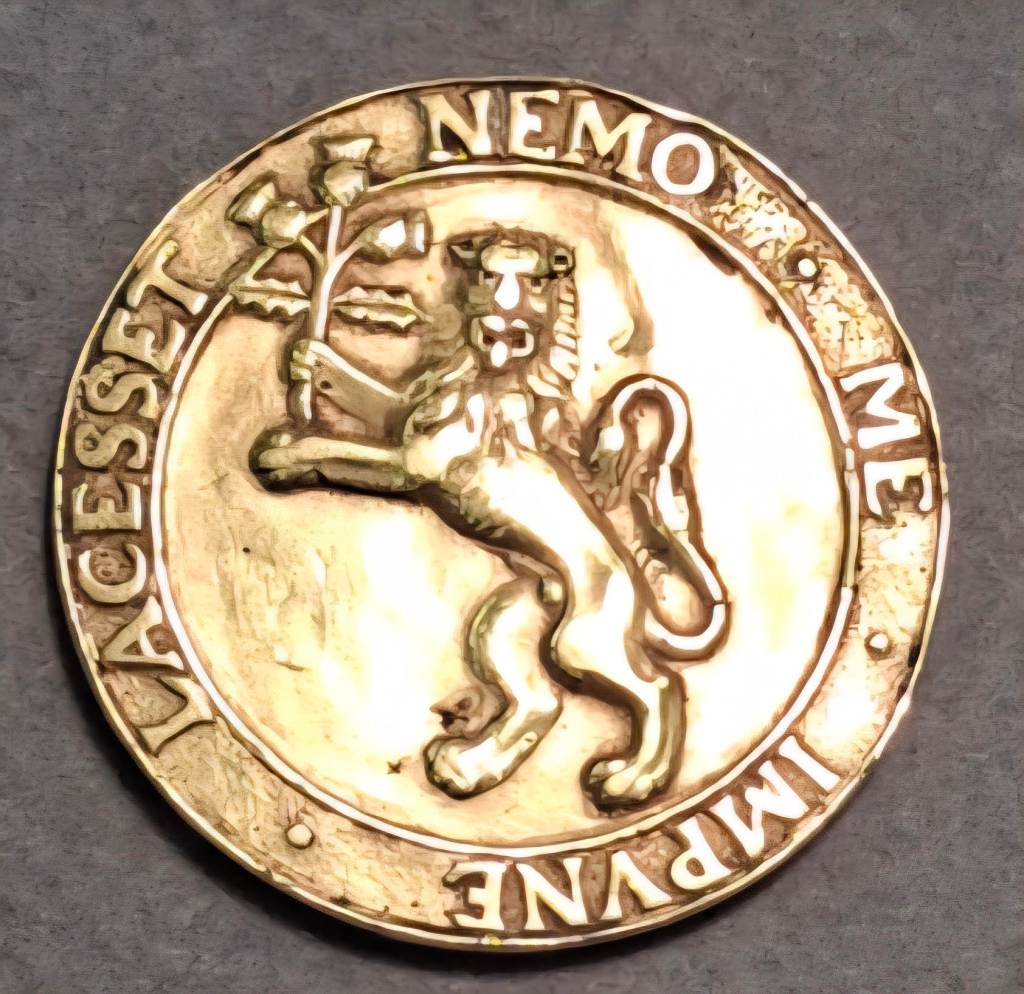
Charles II Scottish Coin, The Hunterian Museum
I am a SGSAH-funded doctoral candidate in History at the University of Glasgow / University of the Highlands and Islands, researching Royalism in Cromwellian Scotland. My research aims to understand the ideology and identity of the Scottish Royalist movement in its British, Scottish, Gaelic, and international contexts. Additionally, my research encompasses the popular manifestations of Royalism, and Scottish women’s experience in the Royalist movement. My project incorporates the use of Scottish Gaelic sources such as vernacular poetry, oral tradition, and clan histories as part of its investigation, to provide a linguistically balanced account of the Scottish past.
Pat Mason
Detail from the title page of “Answere to M.I Forbes of Corse His Peaceable Warning Calderwood,” 1638
A SGSAH funded researcher, I am interested in seventeenth-century writers in the north-east of Scotland.
The north-east has traditionally been considered a conservative area. My research will demonstrate how far texts produced in the place and period support this view. Challenging the ‘broad-brush’ depiction of seventeenth-century Scotland, it will demonstrate the value of regionality. My literature focused approach allows long-dead writers to speak for themselves as far as possible.
My current research is focused on the debates around the National Covenant in 1638, which entails close-reading of pamphlets and sermons, but is ultimately intended to feature ‘creative’ writing too.
Tane Moorhouse
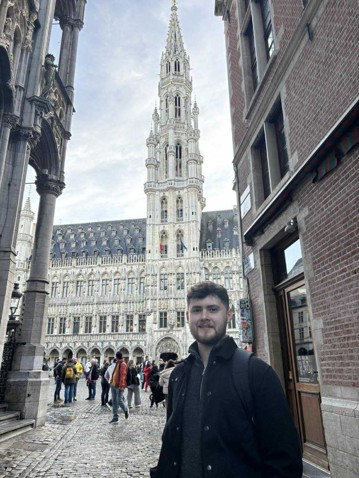
I’m the Strathmartine Trust’s PhD Candidate in Early Modern Scottish History at the University of Dundee. My thesis, ‘Authority, Marginality, and Locality: Dundee & Forfarshire, c.1583–1687’, examines the region’s landed elites, royal burghs, and clergy. It reveals how authority functioned in practice, addressing issues of power, wealth, justice, representation, and social inclusion.
I’m drawn to seventeenth-century Scotland for its unique complexity. Following the Union of Crowns in 1603, Scotland became part of a contested Stuart composite-monarchy where competing visions of church, state, and identity sparked revolutions, civil war, regicide, and military occupation. The seventeenth century therefore marks a compelling period in Scottish history.
Want to follow along with the Scottish 17th Century Research Group? Make sure to subscribe to their Substack here.

