
Introduction by Olivia Shaw-Lovell | Guest reflection by Kpanie Addy, SJ
A few weeks ago, I wrote about why PhD students need to show up where the conversations are happening. As a first-year PhD student, I am still learning how much of doctoral formation happens beyond the desk: in seminars, conferences, workshops, and the conversations that continue after a presentation ends. I promised then that I would share more from some of the spaces I had been entering, including the 2026 Yale-Edinburgh Conference on World Christianity and the History of Mission. So, this is one of those promised reflections.
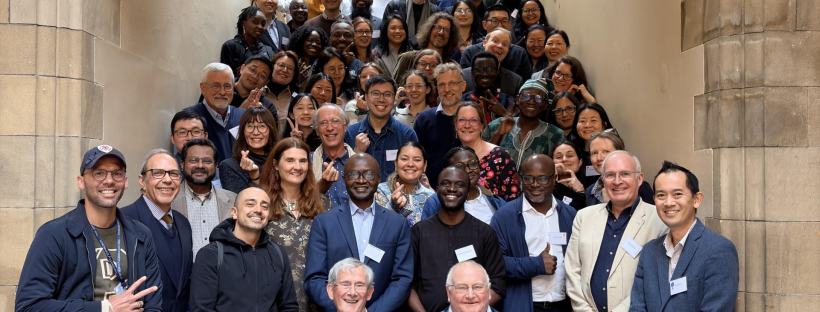
Yale-Edinburgh 2026 was held at New College in June and brought together scholars and doctoral researchers from across Africa, Europe, North America and Asia. I attended as a volunteer rather than a presenter. That gave me a different vantage point: listening, helping, observing the rhythms of an international academic gathering, and watching how ideas moved from formal presentations into conversations between people whose research, locations and stages of career were very different.
Rather than only tell you what I took from the conference, I wanted to make space for another PhD student’s voice. Kpanie Addy, SJ, is a PhD student with the University of Edinburgh’s Centre for the Study of World Christianity and is based in Ghana. He also presented at the conference. His reflection below was first published by the Centre for the Study of World Christianity, and it offers another view of what it means not simply to attend an international conference, but to participate in the scholarly community that forms around it.
There is another reason this reflection feels timely. The Yale-Edinburgh Group has historically been closely associated with its Edinburgh and Yale/New Haven bases. In 2025, however, the conference was held in São Paulo, Brazil, and the 2027 conference is set to move to Nairobi, Kenya. For a field concerned with World Christianity, that geographical movement matters. It places more of these conversations within the regions, institutions and communities that are not simply subjects of scholarship, but active sites of knowledge production.
Below, Kpanie reflects on the 2026 gathering in Edinburgh and looks ahead to Nairobi.
***
Reflections on Yale-Edinburgh 2026
Kpanie Addy, SJ
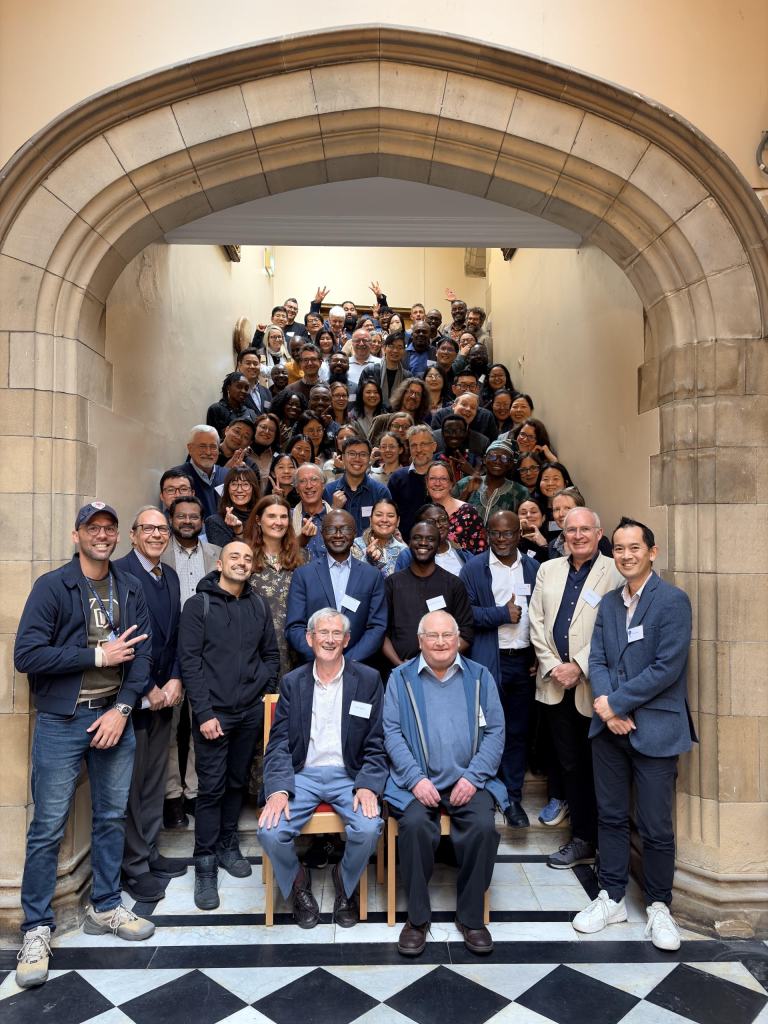
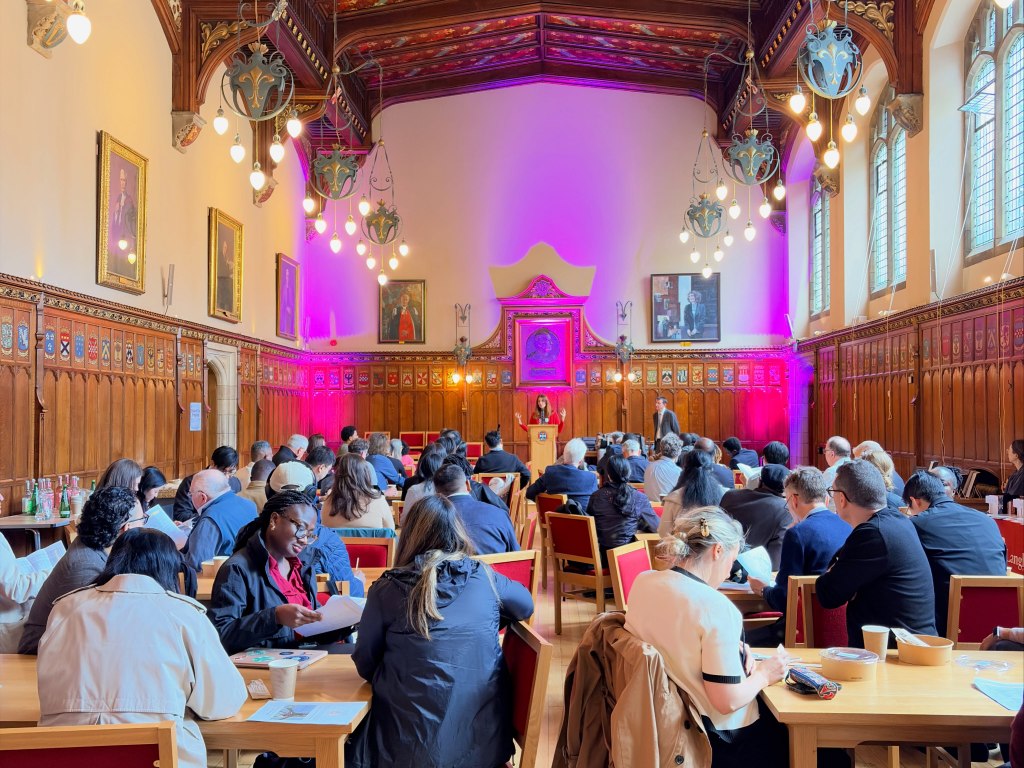
With the theme “Popular, Folk, Grassroots and Pop Culture in World Christianity and the History of Mission,” the 2026 Yale-Edinburgh Conference promised an intellectually stimulating encounter. Held at New College, University of Edinburgh, from 10th to 12th June 2026, it more than met that expectation. Not many conferences witness the eruption of rhythmic sounds and harmonious melodies, with bodies gently gyrating to depict the performative aspects of religious practices, all of which align with the quest to advance academic inquiry. This distinctive feature of the 2026 Y-E Conference pointed to the richness of the field of World Christianity and the need to delve deeper into how religion is evoked, religious soundscapes, and the theatre of Christian ritual. The conference began with a gracious welcome from Professor Jeremy Carette, Head of the School of Divinity, followed by a preview by Professor Emma Wild-Wood, CSWC co-director. The eighty-five participants were then ushered into three days of thought-provoking scholarly exchanges, consisting of forty-eight in-person presentations and two hybrid panels, each comprising three presentations, held in Hong Kong and Nairobi.
Presentations addressed a wide range of themes, including World Christianity and Music; Popular Culture and Christianity in the Digital Age; Mediating Christianity in Popular Culture; Christian Popular Culture, Social Justice and Liberation. Papers were grouped into panels to foster conversations across geographic specialisations, enriching presenters’ insights through regional, thematic, and disciplinary perspectives. Notwithstanding the emergent hybridity, traditional themes in world Christianity, such as the translation principle, resonated across many papers while also introducing novelty to these enduring motifs.
A notable feature of the 2026 Y-E conference was the Duff Lecture, honouring Alexander Duff, a pioneer as both the official missionary of the Church of Scotland and the occupant of the first chair of missiology established anywhere in the world. This year’s lecture was delivered by Professor Jean Kidula, professor of music (ethnomusicology) at the University of Georgia. She explored how music and performance shape grassroots expressions of faith across different cultures, highlighting how translations of musical lyrics from different languages modify meaning and influence Christian identity. Her lecture, “‘This time, I must sing’: African Missionizing and Christian Song,” invited participants to consider musical composition as a site for negotiating identity, memory, and shared spiritual experience.
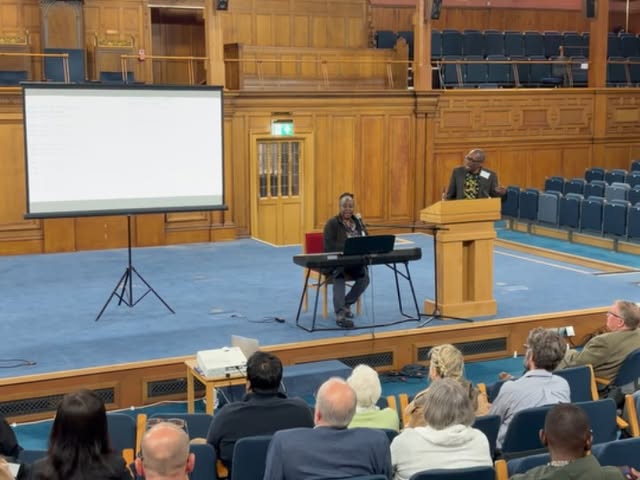
A “Meet the Publishers” plenary session, chaired by Professor Brian Stanley and featuring representatives from Baylor University Press, De Gruyter Brill, and Langham Publishing, attracted many participants and proved highly instructive. Publishers shared practical advice on submitting proposals and outlined the projects they seek, such as monographs. Among the key tips, publishers emphasised tailoring proposals to each publisher’s specific focus areas and advised researchers to provide a clear summary of their argument and intended audience at the outset. They also encouraged early-career scholars to reach out with tentative ideas, rather than waiting for a fully developed manuscript, as editorial teams can often help shape emerging projects. Participants gained insights into the peer-review and editorial processes, making the session especially valuable for finishing PhD students and early-career scholars.
The 2026 Y-E conference, although the first for several participants, was marked by conviviality and warmth, deepened during mealtimes. Yale Divinity School and the Overseas Ministries Study Centre (OMSC) sponsored dinners that participants used as informal opportunities to network and develop ideas from the panels. Coffee breaks and mealtimes also provided space for early-career researchers to engage directly with experienced academics, discuss research interests, and gain practical advice on navigating academic careers. Participants highlighted the sense of community that emerged from such moments, fostering a familial attachment to the Y-E Conference Group. The final night witnessed a sing-along, skilfully moderated by Professor Jean Kidula and Kyama Mugambi, which eventually evolved into a musical contest between Kenyan and Ghanaian participants and their sympathisers. From my perspective, the Kenyans carried the day, with their melodious Kiswahili rhythms.
The Kiswahili cadences will remain with the 2026 participants and lead the Y-E Conference Group on to Nairobi for the 2027 Y-E Conference, slated to take place in Kenya’s capital. Preliminary plans for the Nairobi conference are being facilitated by St Paul’s University, Pan Africa Christian University and Africa International University. After the success of the 2026 Y-E Conference, the prospects are encouraging for future participants to experience Kenya’s religious landscape in a city whose Christianity is described as a fusion of the kiosk and the cathedral. Kwaheri Edinburgh, Karibu Nairobi.
Reference note: The closing description of Nairobi’s Christianity draws on Kyama Mugambi and Mark Shaw, Christians in the City of Nairobi: An African City and the Future of World Christianity (Bloomsbury Academic, 2025).
***
What I appreciate about Kpanie’s reflection is that it captures both sides of the conference experience: the formal scholarship and the informal spaces around it. The papers matter, but so do the conversations over meals, the questions after panels, the people you meet, the ideas you encounter outside your own specialism, and even the moments of music and laughter that make a scholarly gathering feel human.
I hope this reflection also reinforces what I was trying to say in my earlier Beyond the Desk post: doctoral researchers, particularly those of us early in the journey, should enter the rooms where these conversations are happening even when we are not presenting. Volunteer. Listen. Ask the question. Speak to someone over lunch. Pay attention to how other researchers communicate their work. Conferences are not only about the paper you give; sometimes they are about the scholarly community you are learning to inhabit.
If the Yale-Edinburgh Conference is relevant to your work, follow the Yale-Edinburgh Group website for future calls and updates.

