
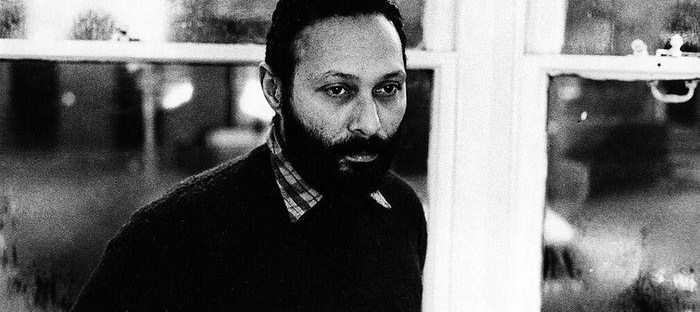
Reflections on intellectual life, the Stuart Hall Foundation and what we do with the knowledge we gain.
I almost cried.
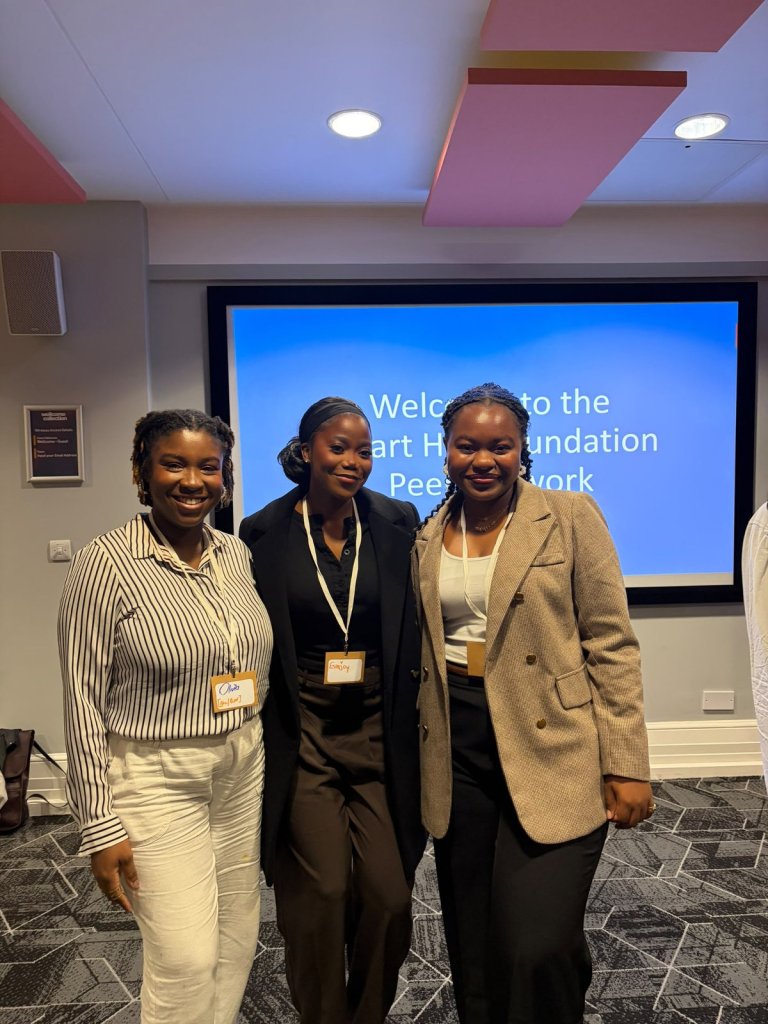
There I was, sitting in a room surrounded by Stuart Hall Fellows and members of the Peer Network, listening to someone who had known and worked closely with the man whose name we now carry.
We had watched Through the Prism of an Intellectual Life, and something about that moment felt sacred.
I started my PhD in January 2026 and found out I was pregnant shortly afterwards, three weeks later, to be exact. And somewhere between motherhood, maternity leave and trying to find my footing, I began feeling disconnected from academic life. Now that I am intentionally stepping back into that world, it sometimes feels like being thrown into the deep end of the sea, trying to find my way back to shore. And it is upon this return that I am realising what truly matters and why.
Now, being in this room at the Wellcome Collection, I felt like I’d been given a life jacket. Or perhaps a rather fancy boat to navigate this journey.
And in this moment of sacredness, a disruptive thought emerged that has challenged me and stayed with me.
We were asked:
What are we ACTUALLY DOING with the knowledge we are gaining?
This came against the backdrop of acknowledging the growing fellowship. But what does that matter if this fellowship, this degree or the entire PhD experience does NOTHING in the lives of others?
These questions led me to think about the intellectuals I grew up learning about and seeing in Jamaica. People like Walter Rodney, whose activism was considered so threatening that he was banned from Jamaica in 1968. I grew up associating university students and academics with challenging governments, questioning injustice and demanding change. I mean, they were the ones leading protests, but now, where is everyone?
Where are those voices today?
Perhaps they are speaking and I am not listening closely enough. It really could just be me. Or perhaps somewhere along the way, we became more concerned with earning degrees than disturbing the systems we were educated to understand.
I have my own discomfort with the academic conveyor belt. Bachelor’s degree, master’s degree, PhD. Straight through. Plenty of theory, but where is the time for the actual lived experience to make sense of the theory? Where is the work beyond the classroom? I would sooner value the knowledge of someone who has spent five years working in a community than assume a doctorate automatically makes someone more knowledgeable.
But that isn’t the reality of the world we live in. Is it?
Our academic qualifications are the keys that open doors to making tangible, life-altering changes for people in society, and sometimes even across the globe. That is a distinct form of POWER that we must acknowledge. And I would urge us not to take it for granted. I will always beg to question: what does the academic know that the dressmaker (otherwise known as a seamstress) in my community doesn’t? And what does that dressmaker know that the academic may never learn?
I remember studying global health for my master’s degree and suddenly understanding some of the international arrangements and policies shaping Jamaica’s development. I was triggered, and I was angry. I went home ranting to my husband and realised that I wanted to start a podcast just to spread awareness of what I was now aware of. Because what I didn’t know or understand then didn’t bother me.
Until the education triggered something within me.
But how many of us get triggered by what we learn and are willing to pull the trigger on change?
But to be honest, many of us are in our ‘ivory towers’, and this can be quite literal for us in Scotland, especially for myself, who studies in a literal castle. The challenge is not that we are seated in these picturesque spaces. It is what happens when we become too comfortable to engage with the realities of the ‘real world’ beyond our castle gates.

During this Black History Month, I find myself thinking about academics like Walter Rodney and the responsibility that comes with being an ‘intellectual‘. Being associated with Stuart Hall’s legacy is an extraordinary privilege. But I don’t want to be remembered simply for having occupied a seat in that room.
I want to know that I did something that mattered, especially to the people I am researching with.
(I said with, not for or about, because I am engaging, not extracting. Nor am I willing to perpetuate the hierarchies of knowledge. I am keen to shatter the barriers around whose knowledge matters and promote the fact that everyone’s does.)
Because what good is a degree if all it produces is a greater degree of disconnect?
About the Stuart Hall Foundation Fellowship
The Stuart Hall Foundation honours the legacy of Jamaican-born cultural theorist Stuart Hall, supporting new generations of thinkers committed to challenging inequality and contributing to social change.
Through its partnership with the Scottish Graduate School for Arts & Humanities (SGSAH) and the Scottish Graduate School of Social Science (SGSSS), the Foundation offers a limited number of fellowships to funded doctoral researchers from under-represented and disadvantaged backgrounds, particularly those whose research connects with Stuart Hall’s intellectual legacy. Eligible applicants who successfully secure doctoral funding may be invited to apply separately for a fellowship.
Fellows become part of the Foundation’s wider intellectual community, with opportunities for networking, collaboration and professional development.
We are always seeking new guest bloggers! If you have an idea for a blog post or would like to informally discuss writing for the SGSAH blog please get in touch with Olivia via email at olivia.shaw-lovell@glasgow.ac.uk or connect with the blog on social media.

