
A Snapshot of the Image-Driven World: The Déjà-Vu of Meiji Japan in British Visual Culture, c.1887-1910
Reproduction, from photomechanical printing to digitisation, can make literally countless copies of any one image. Researching pictures of Meiji-period Japan (1868-1912) by British artists in reproducible mediums, one question that I keep finding myself returning to is how to navigate the messiness of the image-driven world.
From the late-Victorian period to the present day, images have pervaded every aspect of life. They are so embedded in everyday experiences in a variety of material forms, so much so that viewers become desensitised to those mundane presences.
How do I make sense of the multitude of images? How to distinguish a picture from an image? How to visualise that distinction and demonstrate its significance to a non-specialist audience? How do digital technologies alter the relationship between human and art? The 2026 SGSAH Research Showcase offered me a space to experiment with some very tentative ideas.
Crafting a Microcosm of the ‘Japan Craze’
My showcase was envisaged as a snapshot of late-Victorian and Edwardian visual culture, specifically that of the ‘Japan Craze’. The term refers to the intense obsession with Japan in British society which drove the fervent production and consumption of Japan-themed art objects since the 1860s. Object-based analyses have drawn attention to individual artefacts and shown the diversity of how the Japan Craze was expressed, but the span of the phenomenon, shifting experiences of it over time, and its lasting legacies in the present day have often fallen through the cracks.
Bringing together the works of the Australian-born London-based artist Mortimer Menpes (1855-1938) made from 1887 to 1910, my display is designed to enable a glimpse into the Japan Craze through a trans-temporal lens.
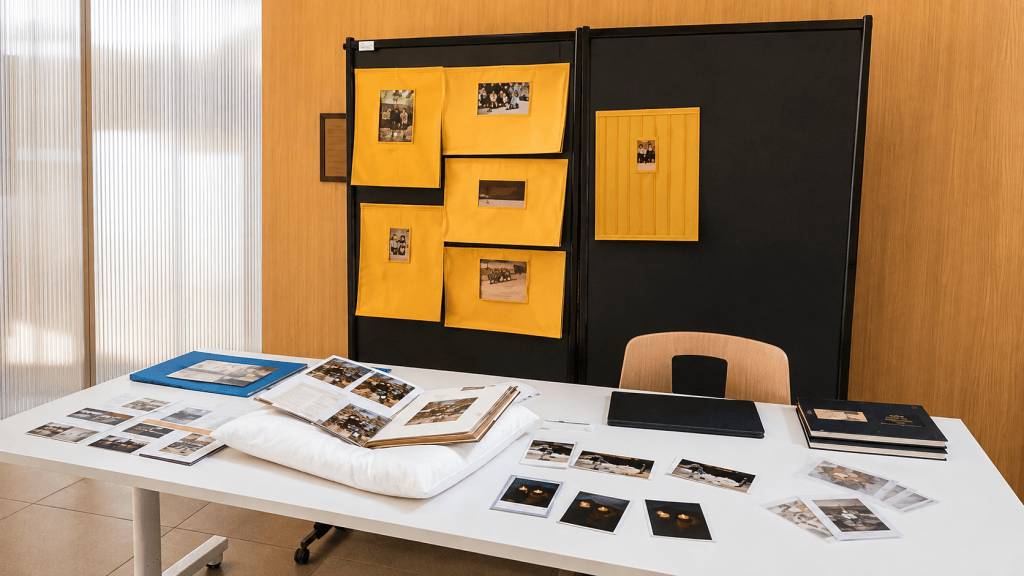
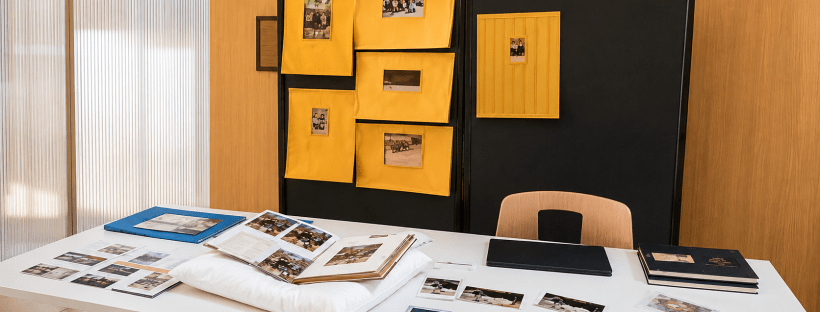
Photo of my Showcase at 2026 SGSAH Summer School.
My exhibits consisted of three groups: copies of Menpes’ Japan paintings from 1888, his illustrated book published in 1901, and a collection of picture postcards issued between c.1904 and 1910. Made two decades apart and intended for different audiences, these objects are nevertheless tied by their content: Menpes recycled the composition of the paintings for his illustrations and later granted postcard publishers the rights to reproduce those colour plates. The Japan images, therefore, were reproduced and took several material forms.
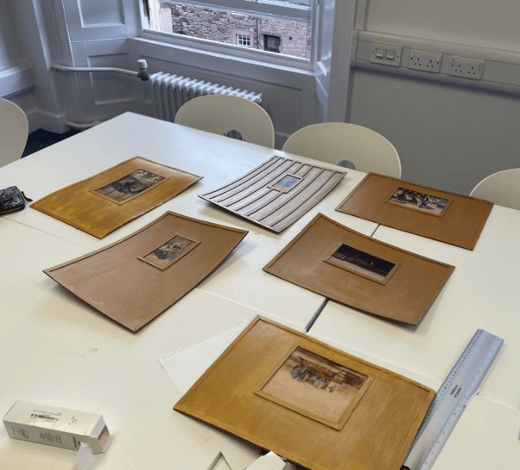
I made mock picture frames that echo the style of Menpes’ original designs to emphasise the materiality of the paintings.
The tension between the materiality of art products and the multiplicity of images was a central theme. While the ‘paintings’ were hung to evoke Menpes’ original arrangement when exhibiting the pictures, the others were spread out for visitors to freely handle. My rationale was to not only display images but also invite embodied experience of the various physical iterations of those images. By juxtaposing these objects, my aim was to foreground the overlooked connections between the various iterations of Menpes’ Japan images.
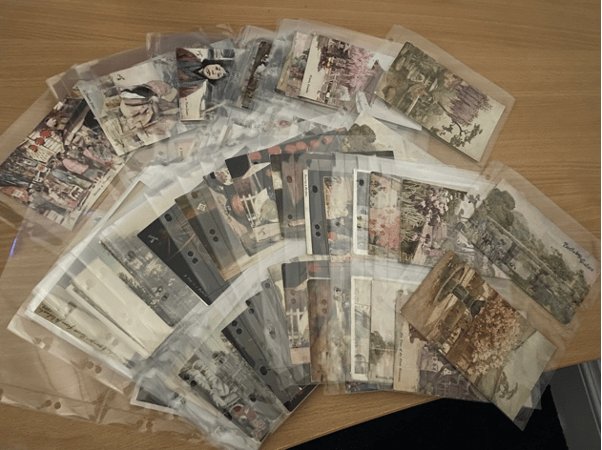
The collection of Japan-themed postcards which I have been building and from which some of the exhibits were drawn.
Constructing An Intertextual Network of Images
The time I spent collating images from museum collections, auction records and digital databases has seen too many déjà-vu moments (‘this looks familiar…wait I have seen this before…or maybe not…what is it that it reminds me of…ARGHHH!!’). After all, not only was the artist notorious for capitalising on reproduction techniques to make and market multiple copies of his work, but digitisation has also further obscured the materiality that distinguishes, for example, a book illustration from a picture postcard. Without the actual, tangible artefacts to facilitate direct comparison, images can easily become de-contextualised and free-floating in their digital iterations.
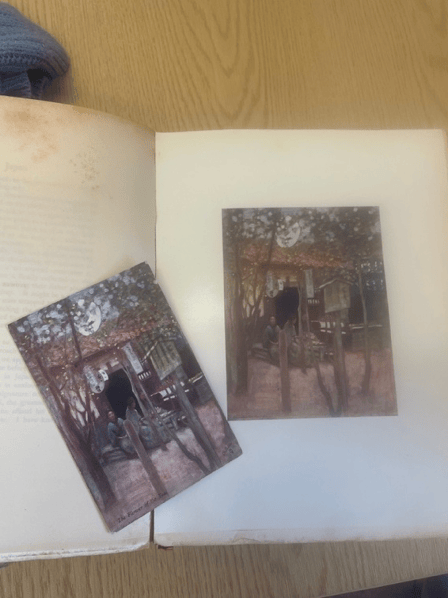
Photo showing a picture postcard and a colour plate from Menpes’ illustrated book. Both are iterations of the painting Flower of the Tea.
Mapping the relationship between the different iterations, therefore, was a priority for my showcase. It encouraged visitors to look, closely, comparatively and holistically, at the works in relation to each other rather than in isolation. A little detective work connecting the dots could so satisfyingly tease out the links between the paintings, the book and the postcards. By charting, or capturing a snapshot of, the intertextual network of images, the interconnections between historical artefacts and the continuity as well as fluidity of experience will emerge.
Moreover, the initial disorientation upon beholding the unlabelled works deliberately brought the images into focus. Decentring the viewer and restoring agency to the object is particularly helpful and often necessary when the artefacts in question are mass produced ‘copies’ that have no single distinct provenance. In addition to searching for their significance in any given context, I find it fruitful to also trace the biography of the image in relation to each other and ask how images can transcend the original context and accrue meanings beyond the scope of its original production, dissemination and reception.
Confronting An Image-Driven World
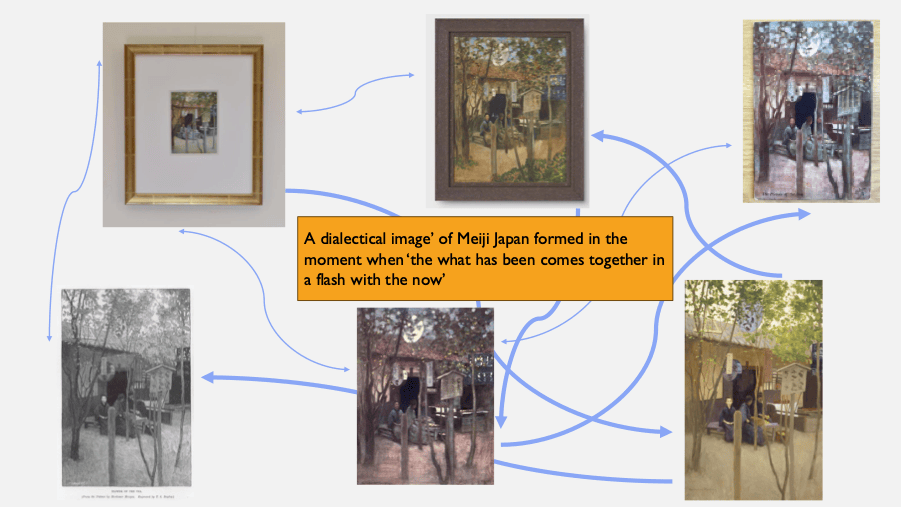
An example charting the interconnections between Menpes’ Japan images.
The proliferating images arrange themselves into an orderly mess. This mess, frustrating and fascinating in equal measure, is more closely woven into the fabric of our daily lives than ever.
In fact, images can be so insidiously omnipresent that we sometimes become unaware of our encounters with them and how those encounters shape what and how we know about unfamiliar subjects. Reproduced over time, Menpes’ Japan images participated in the continuing construction of a cultural discourse, one that has been very much perpetuated and adapted to the present day. They are at once independent art products and fragments of a broader network that frames the cross-cultural imagination of the masses.
Digital technologies have made it easier than ever to circulate and manufacture visual information around the world, sometimes to the point of excessiveness. Experimenting with a kaleidoscope of images, my showcase spotlighted those that we see but fail to fully register. It serves as a reminder of the roles that objects, which might appear too ordinary to have significance, could play in the larger picture of historical narratives.
(Jin Chenxiao, PhD candidate, School of Art History, University of St Andrews)

